
- Product
- Ventora
- Sector
- Startup fundraising & angel investment
- Our role
- Architecture, full-stack development and integrations
- Access
- Private, by invitation only
- 7user roles, from founders and investors to scouts, experts and deal admins
- 8deal stages, from invitation to a deployed, closed round
- 70+modules, from deal tracking and data rooms to commissions and angel groups
- 4integrations: KYC API, Odoo, Google Firebase and Mailgun
See the real platform
Ventora is not the client’s real brand. To protect the client’s identity and their investors’ privacy, the platform is shown here under a name used only for this case study, with a re-themed interface and sample data. It is a closed system, so there is no public site to visit, but we can show you the real platform privately.
Request a private demoShared privately, on request
Want the workflow walkthrough?
We can walk through the deal pipeline, the role permissions, the data room and how the integrations fit together.
Book a walkthroughAbout 30 minutes, no obligation
The brief: a private market for startup deals
The client runs an investment network that sources early-stage startups, vets them and presents the strongest to its investors. The work had been running on spreadsheets, email threads and personal introductions. They needed one platform where every deal follows the same process, every person sees only what their role allows, and nobody gets in without an invitation.
The hard part was not any single screen. It was the hand-offs: a scout introduces a startup, an expert screens it, the founder fills a data room, a lead expert writes the memo, a deal admin runs the pitch night, investors commit, and finance confirms fees and deployment. Each step had to know what came before it, notify the next person and leave a record the deal admin could follow.
Who uses the platform
Startups
Apply for funding, complete onboarding and the data room, then follow their round, talk to their experts and manage who sees what.
Investors and angel groups
Complete KYC once, receive exclusive invitations, commit to rounds and track every investment through to deployment.
Scouts
Find promising startups, invite them onto the platform and earn a commission when the round closes.
Investor finders
Bring new investors into the network and earn a commission on what those investors put in.
Due diligence experts
Run the initial screening, the final due diligence and the investment memo, under deadlines the platform enforces.
Deal admins and super admins
Deal admins sit between startups and investors, scheduling pitch nights and running rounds. Super admins manage people, rules and fees.
How a deal moves through Ventora
Every startup follows the same eight stages. Each stage has an owner, a status the deal tracker can show, and emails or reminders that move it to the next person.
A closed door with clear ways in
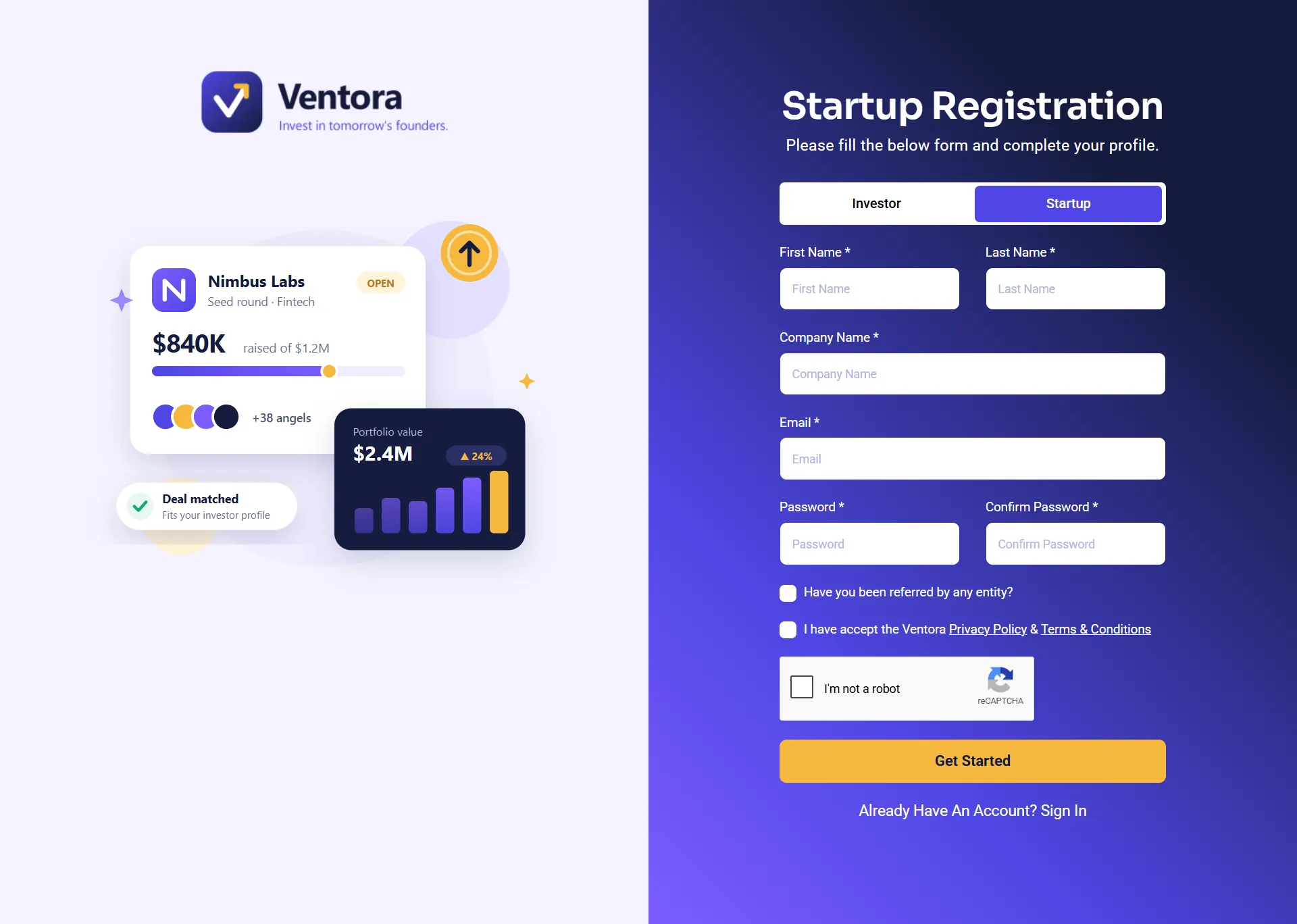
There is no public sign-up. Startups and investors arrive through invitation links that are encrypted, tied to one purpose and shortened with Google Firebase, or they pre-register and wait for approval. Every account keeps the name of the person who introduced it, which is how scouts and investor finders are credited later.
 — view the complete, scrollable screenshot
 — view the complete, scrollable screenshot
 — view the complete, scrollable screenshot
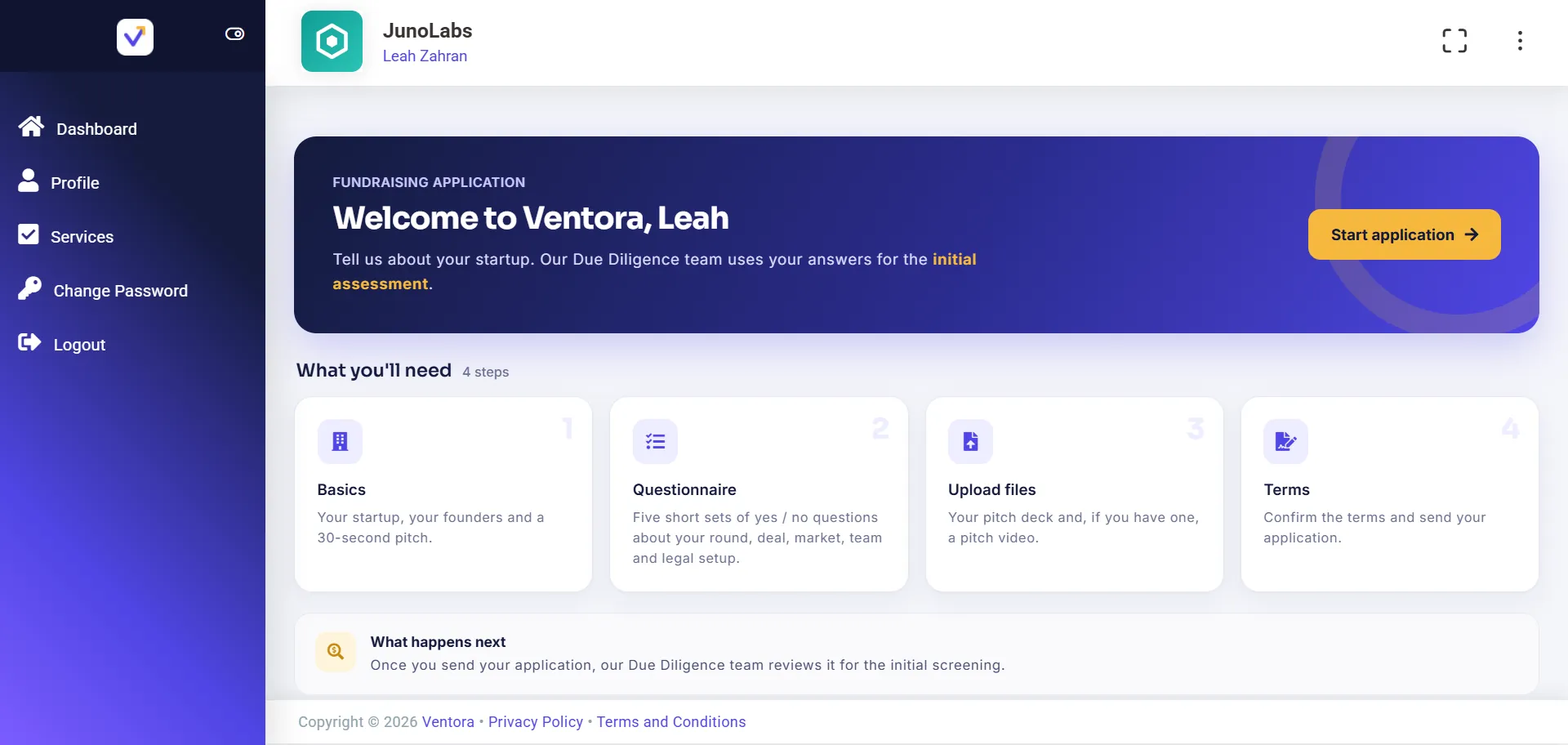
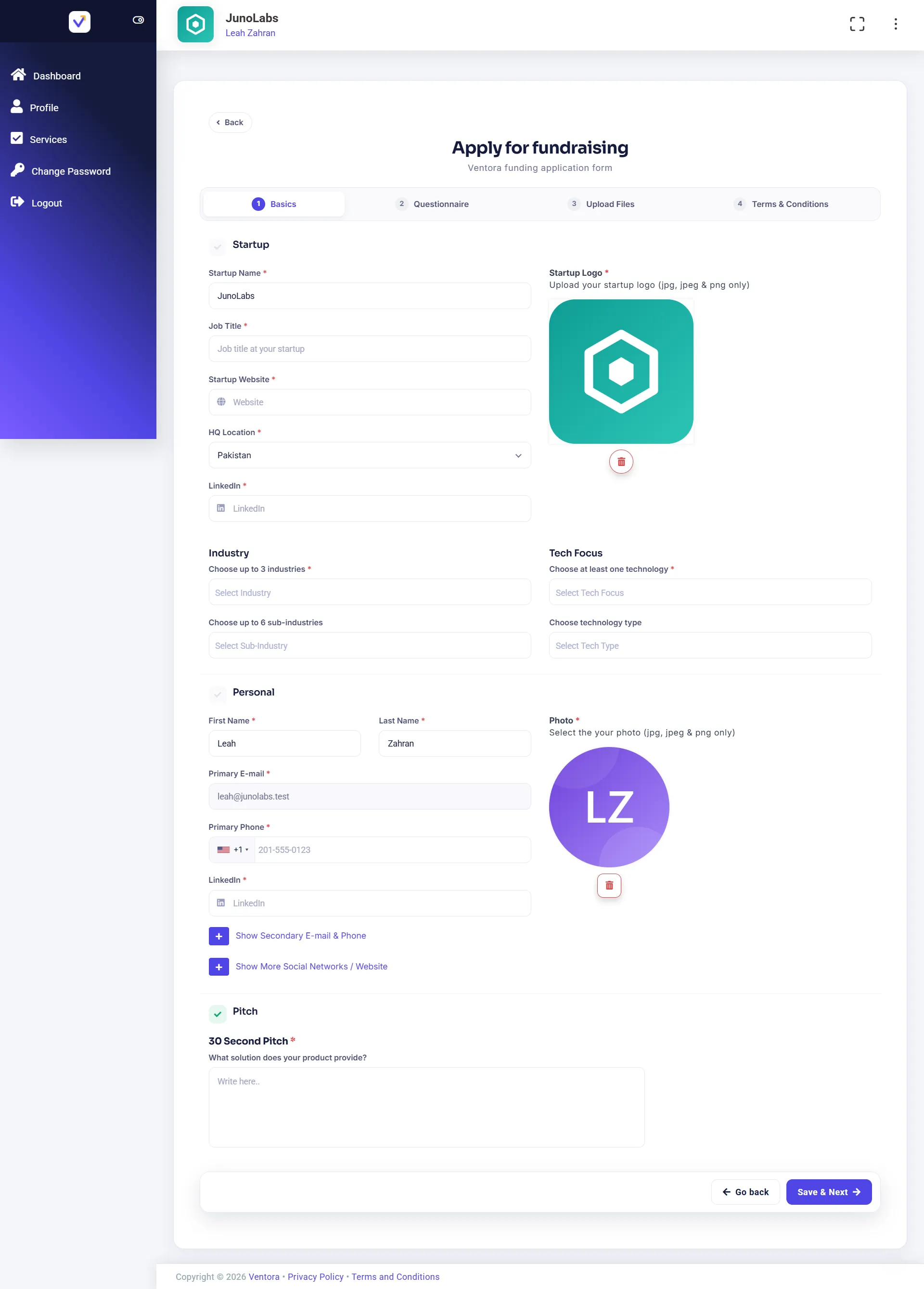
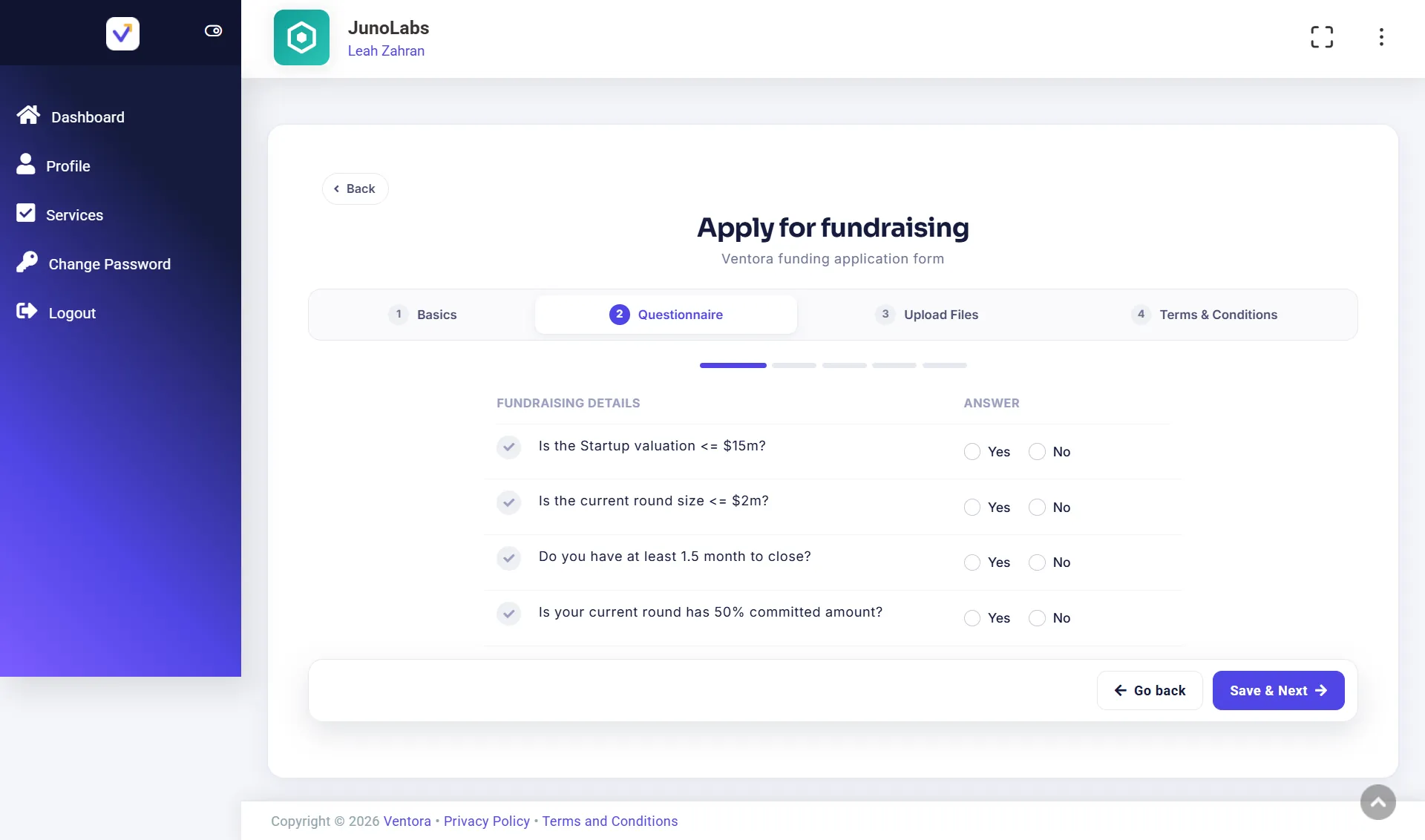
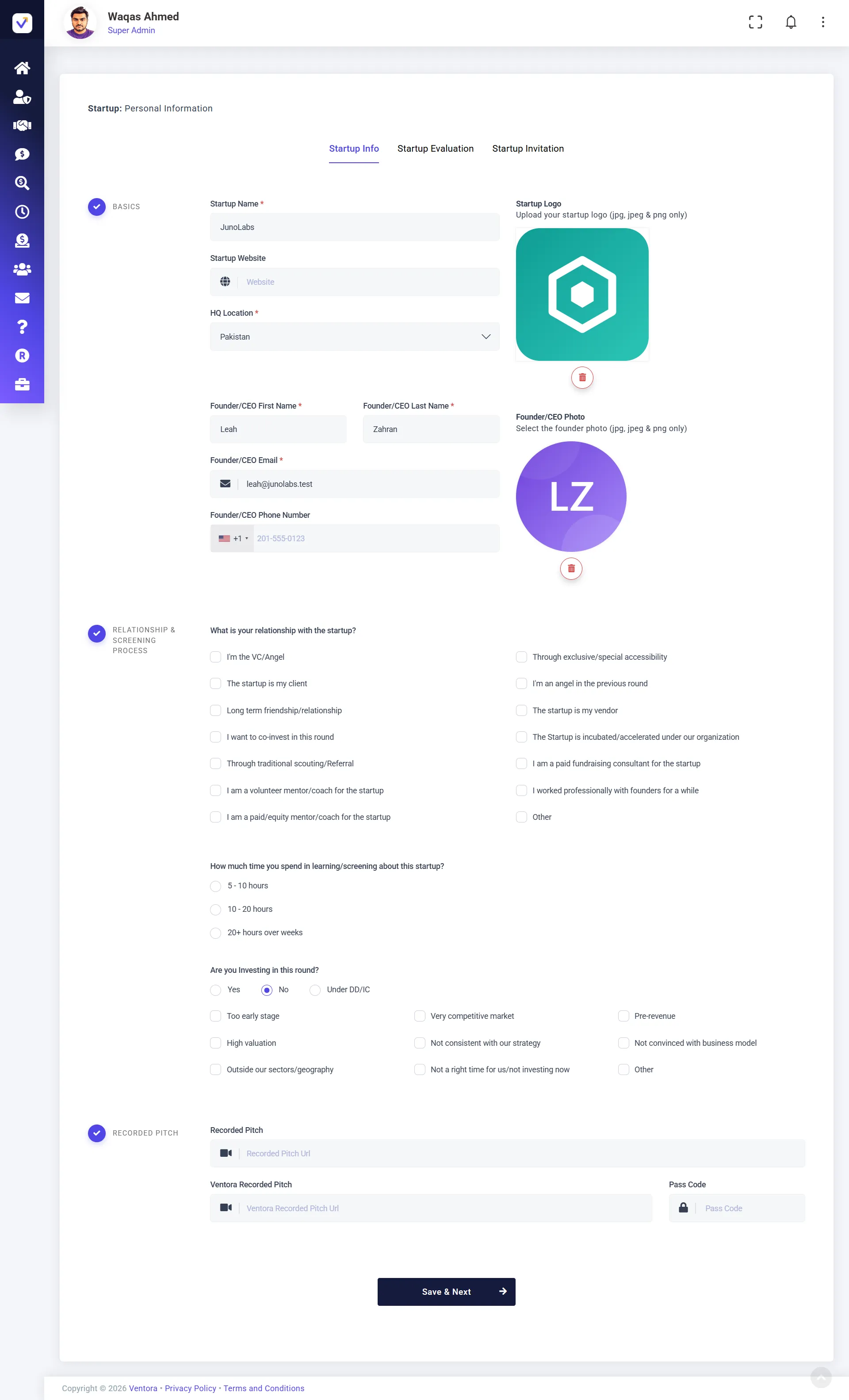
Startups apply for funding
The application is short on purpose. It asks for what the screening team needs to decide whether to look closer, and every answer is stored as data the screening criteria can score, not as free text someone has to re-read.
 — view the complete, scrollable screenshot
 — view the complete, scrollable screenshot
 — view the complete, scrollable screenshot
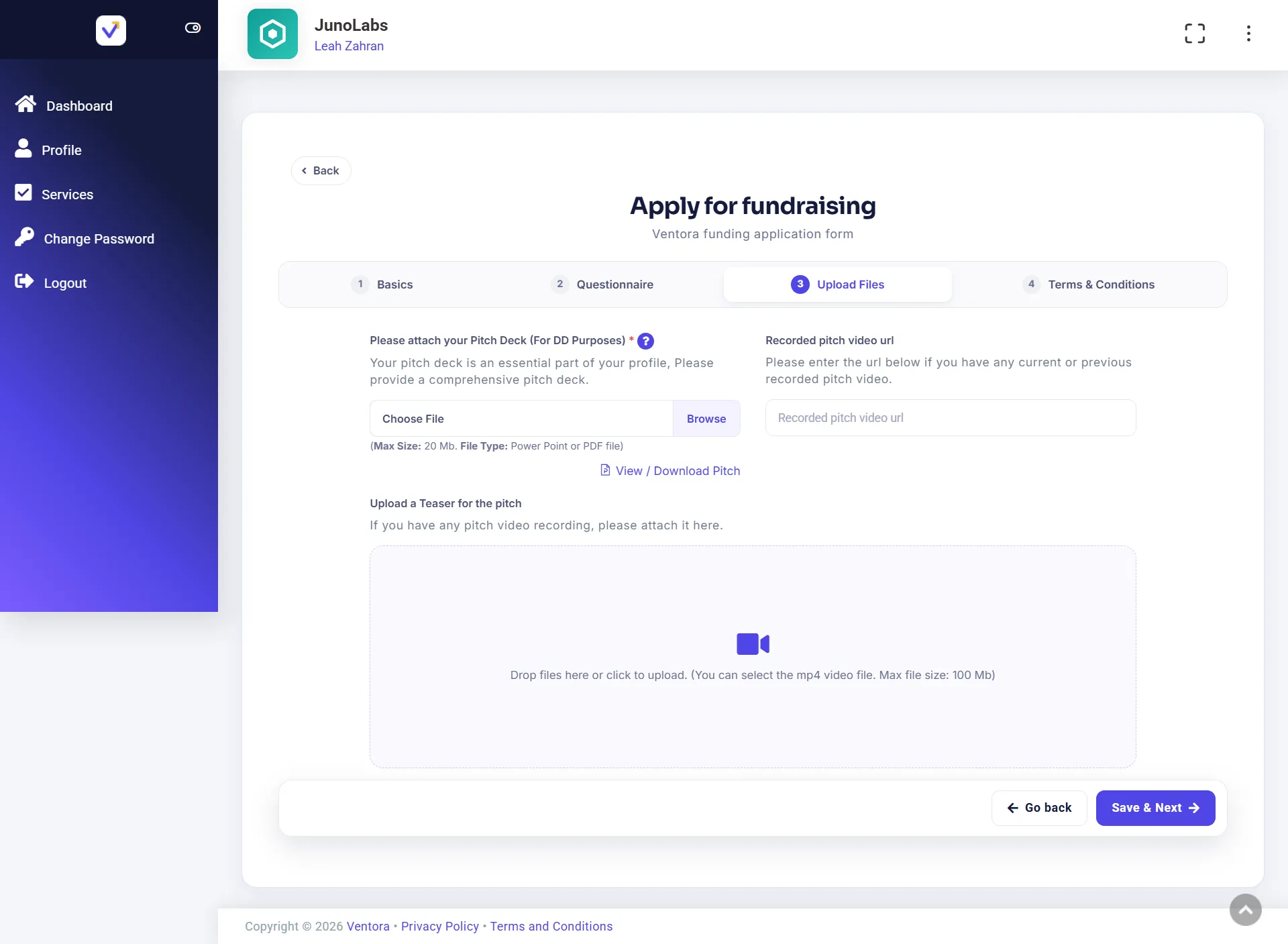 — view the complete, scrollable screenshot
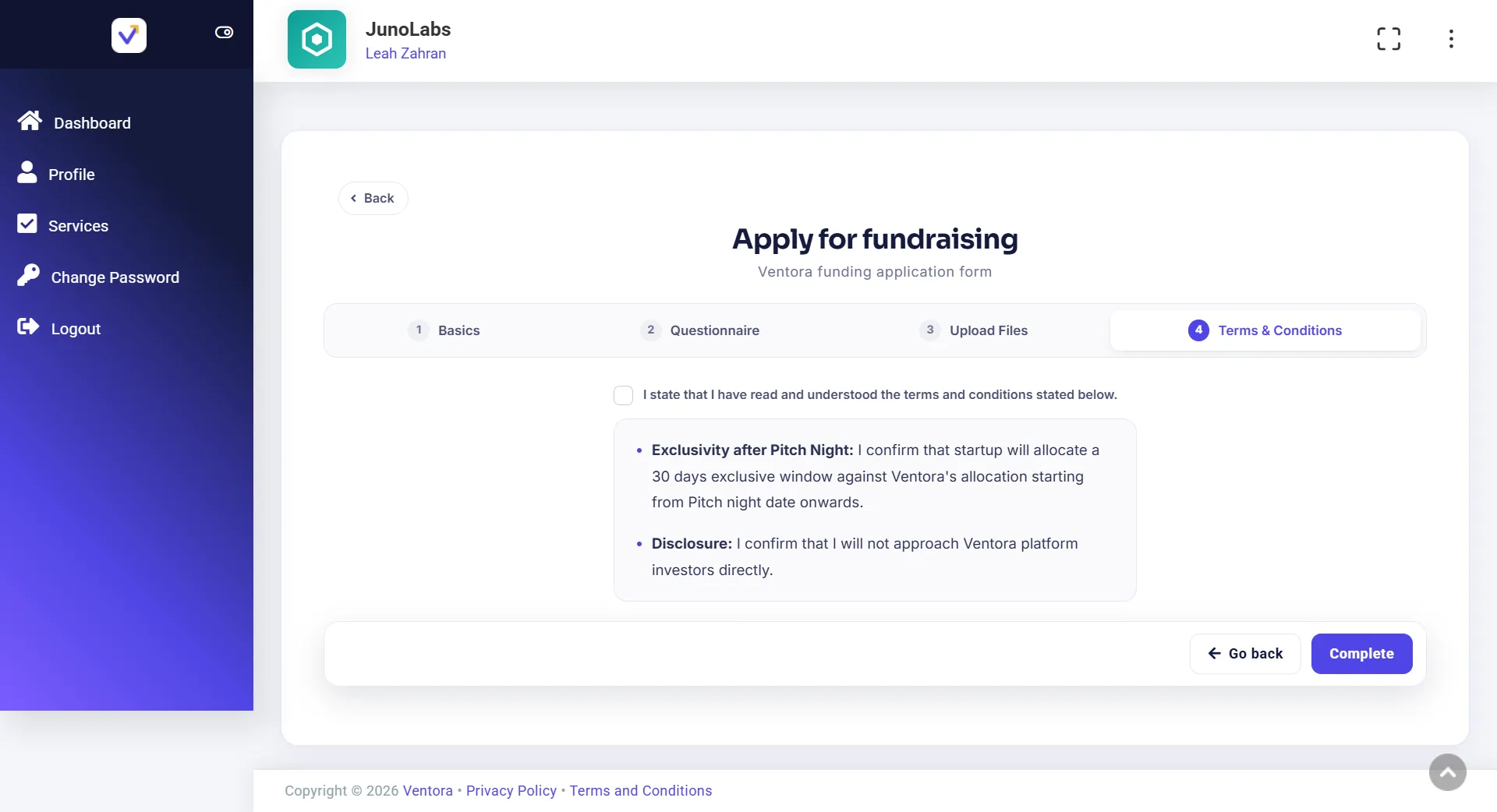 — view the complete, scrollable screenshot
Screening and due diligence by assigned experts
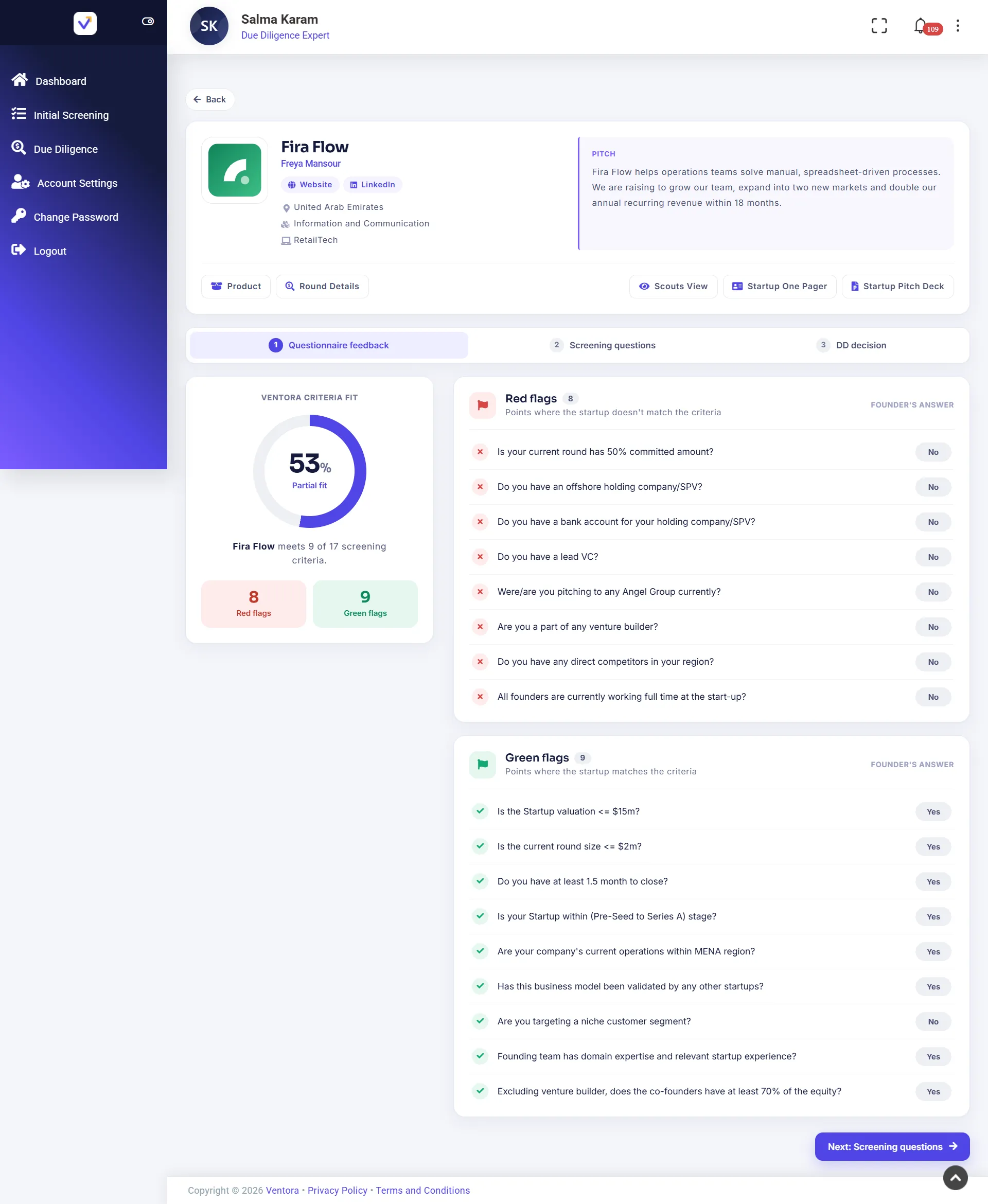
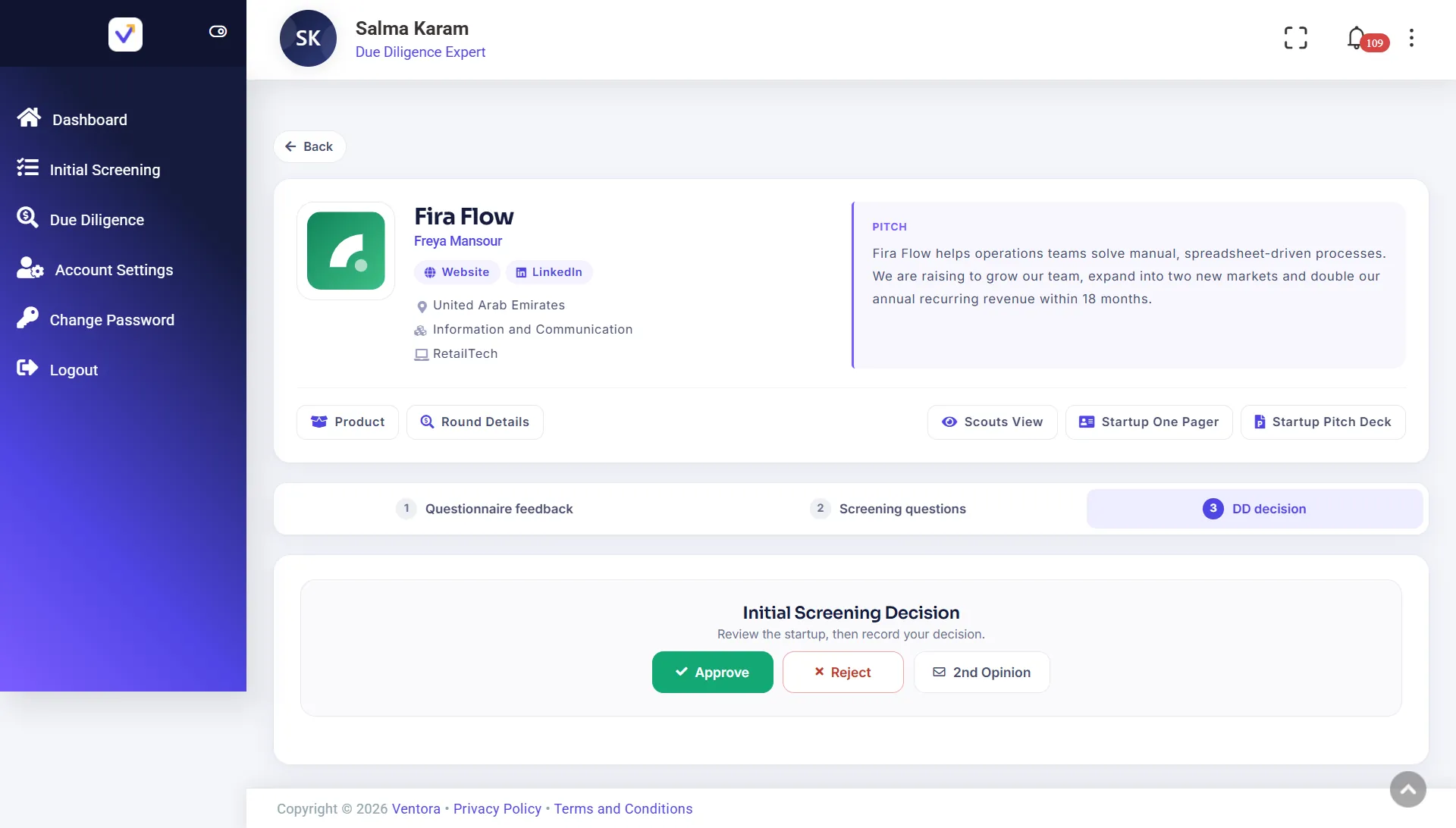
New applications are assigned to a due diligence expert by default, or by the deal admin. The expert sees the startup’s fit against the platform’s criteria, the screening questions and answers, and the scout’s own view, then records a decision. Startups that later reach final due diligence get a lead expert and a team, with deadlines: reminders go out before a review is due, and a timeout alerts the deal admin when it is late.
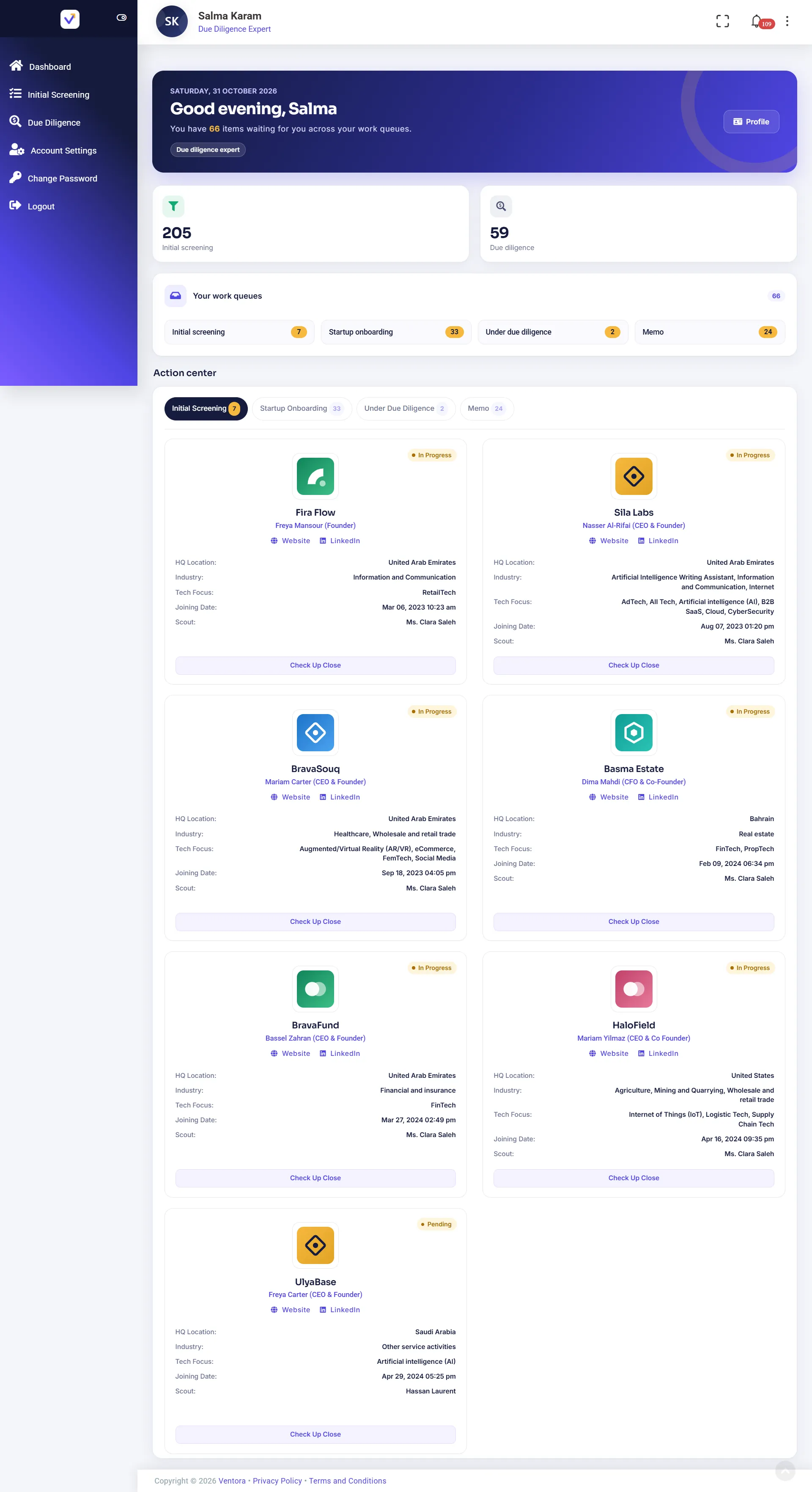 — view the complete, scrollable screenshot
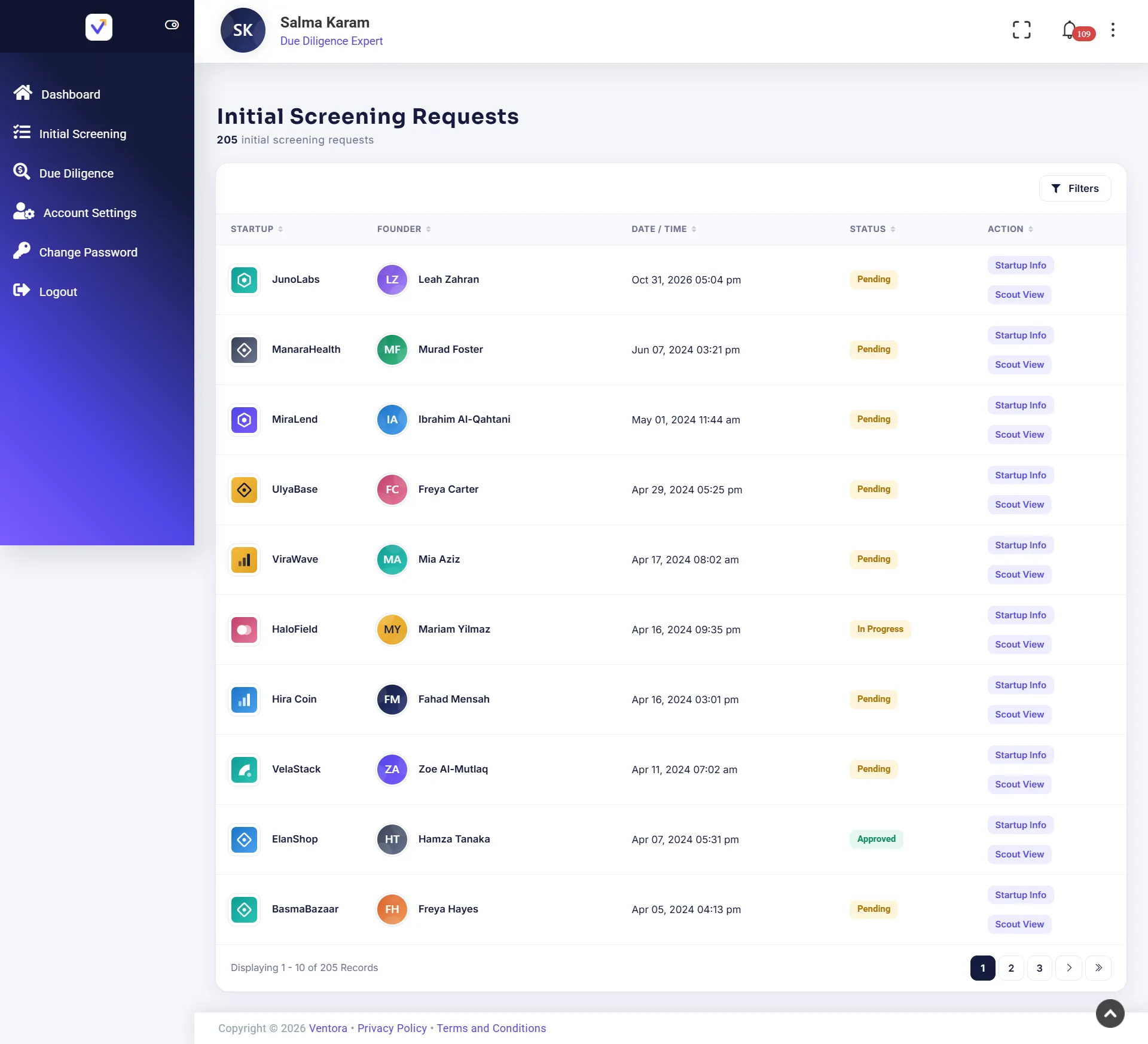 — view the complete, scrollable screenshot
 — view the complete, scrollable screenshot
 — view the complete, scrollable screenshot
 — view the complete, scrollable screenshot
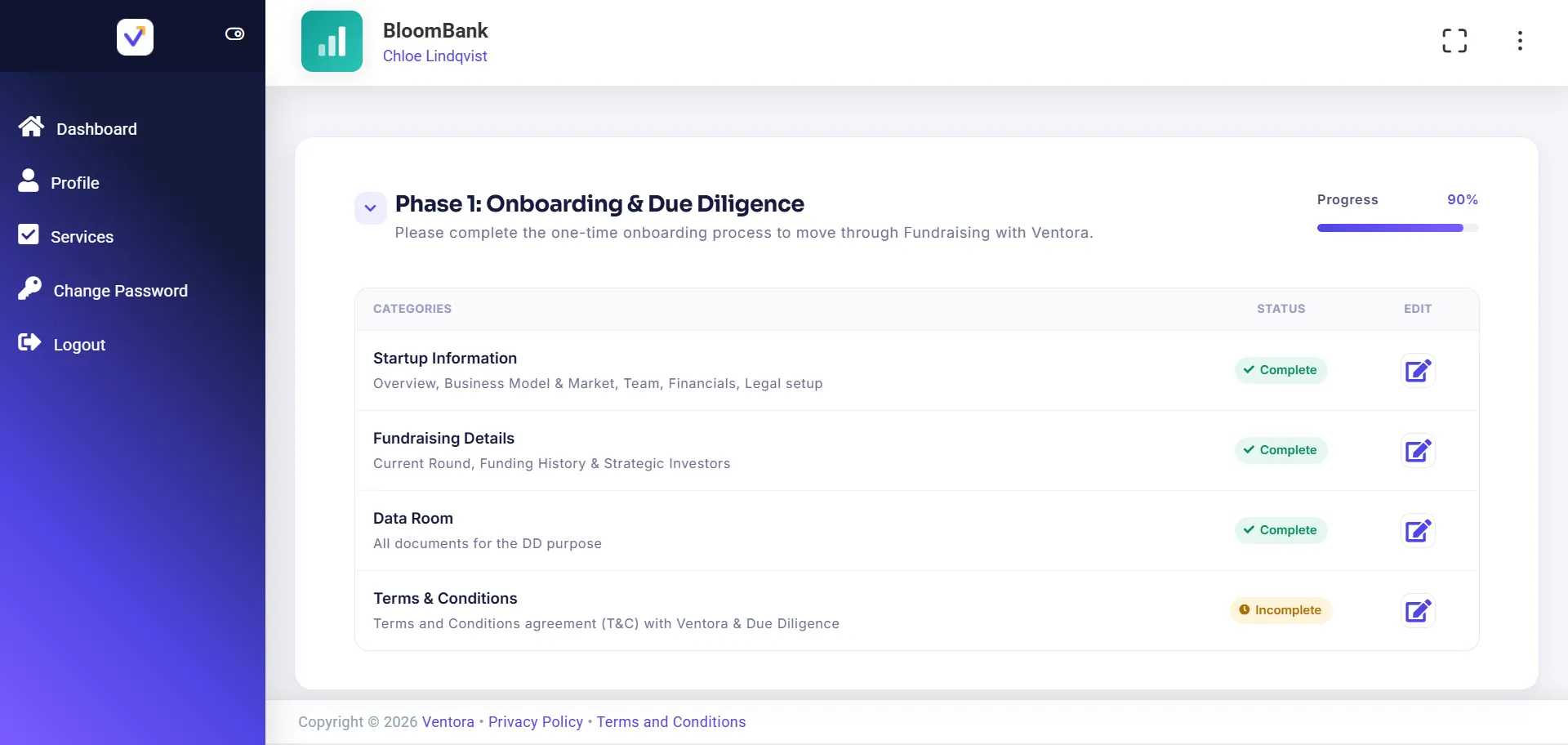
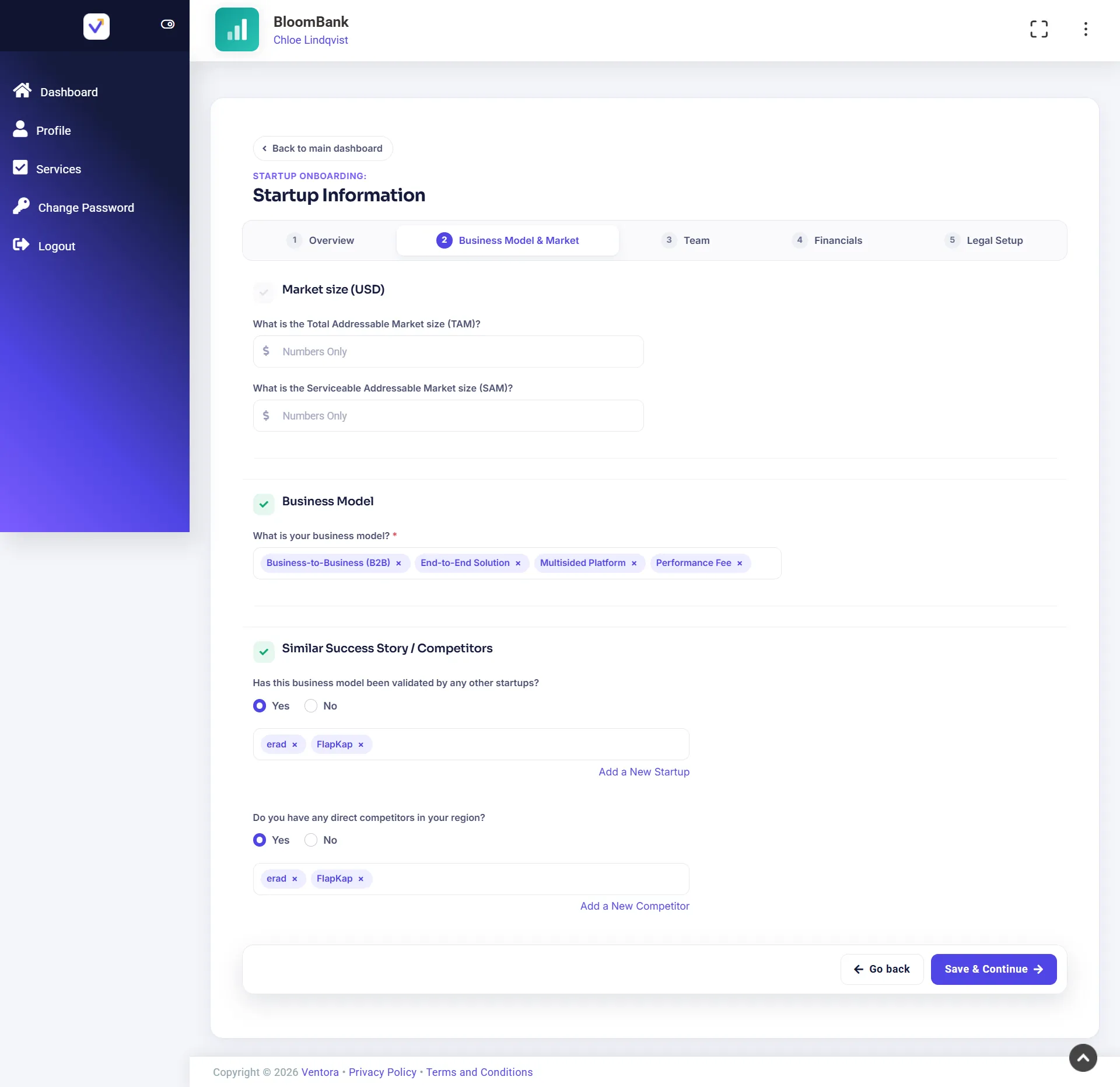
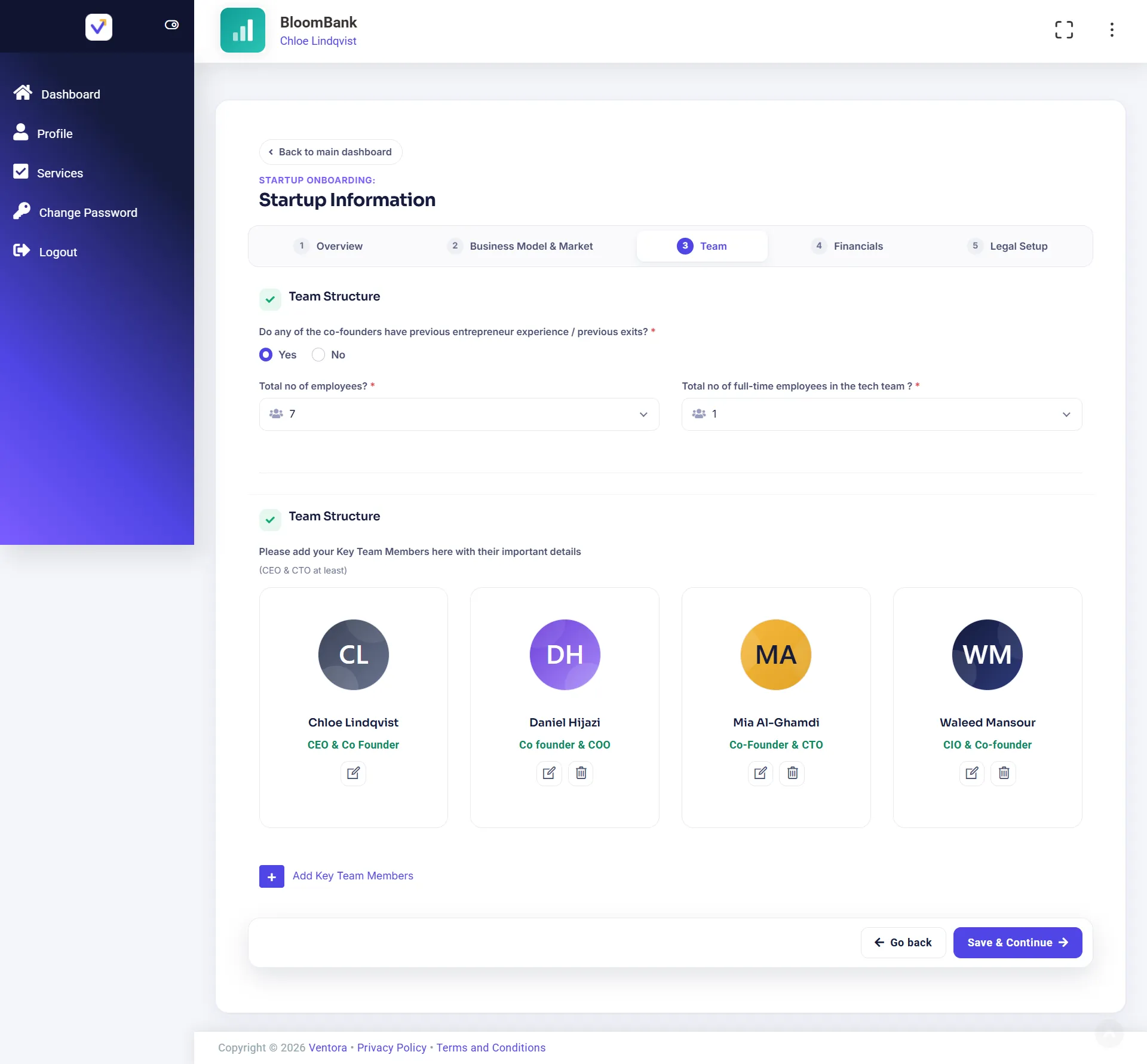
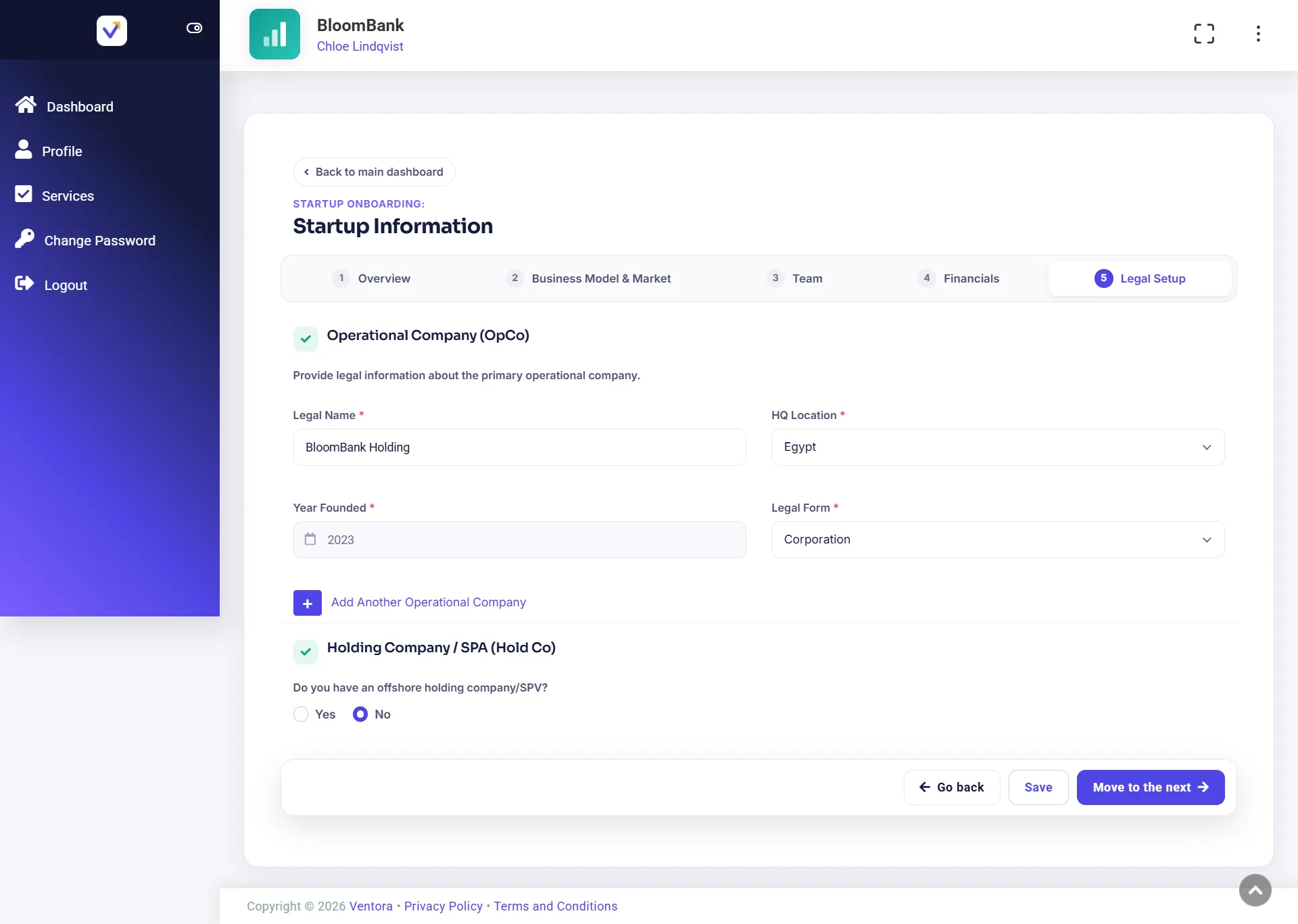
Onboarding builds the investor-ready profile
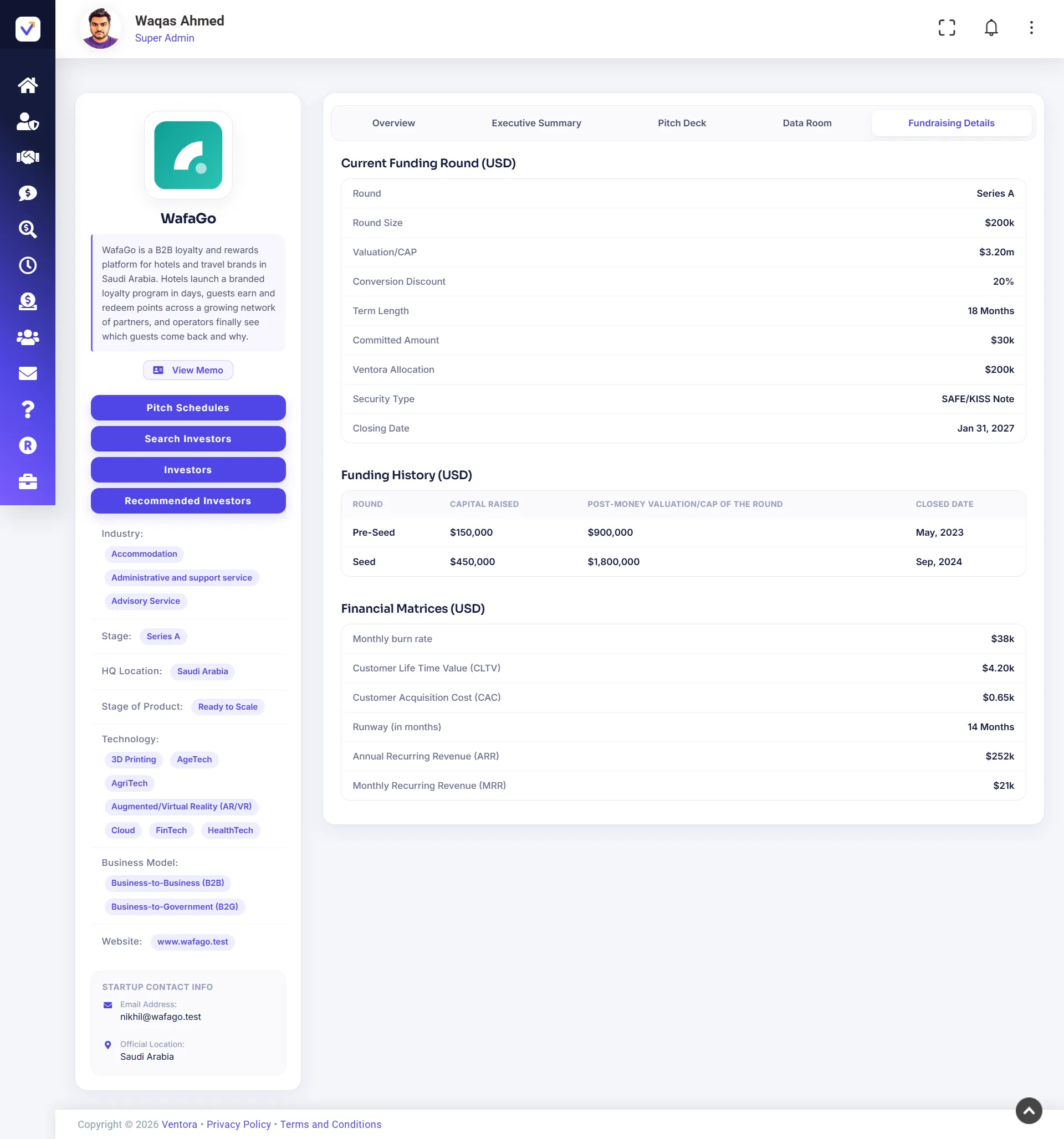
Startups that pass screening complete a detailed onboarding. The same records later become the profile investors read, the round details deal admins manage and the data room experts review, so nothing is typed twice.
 — view the complete, scrollable screenshot
 — view the complete, scrollable screenshot
 — view the complete, scrollable screenshot
 — view the complete, scrollable screenshot
 — view the complete, scrollable screenshot
 — view the complete, scrollable screenshot
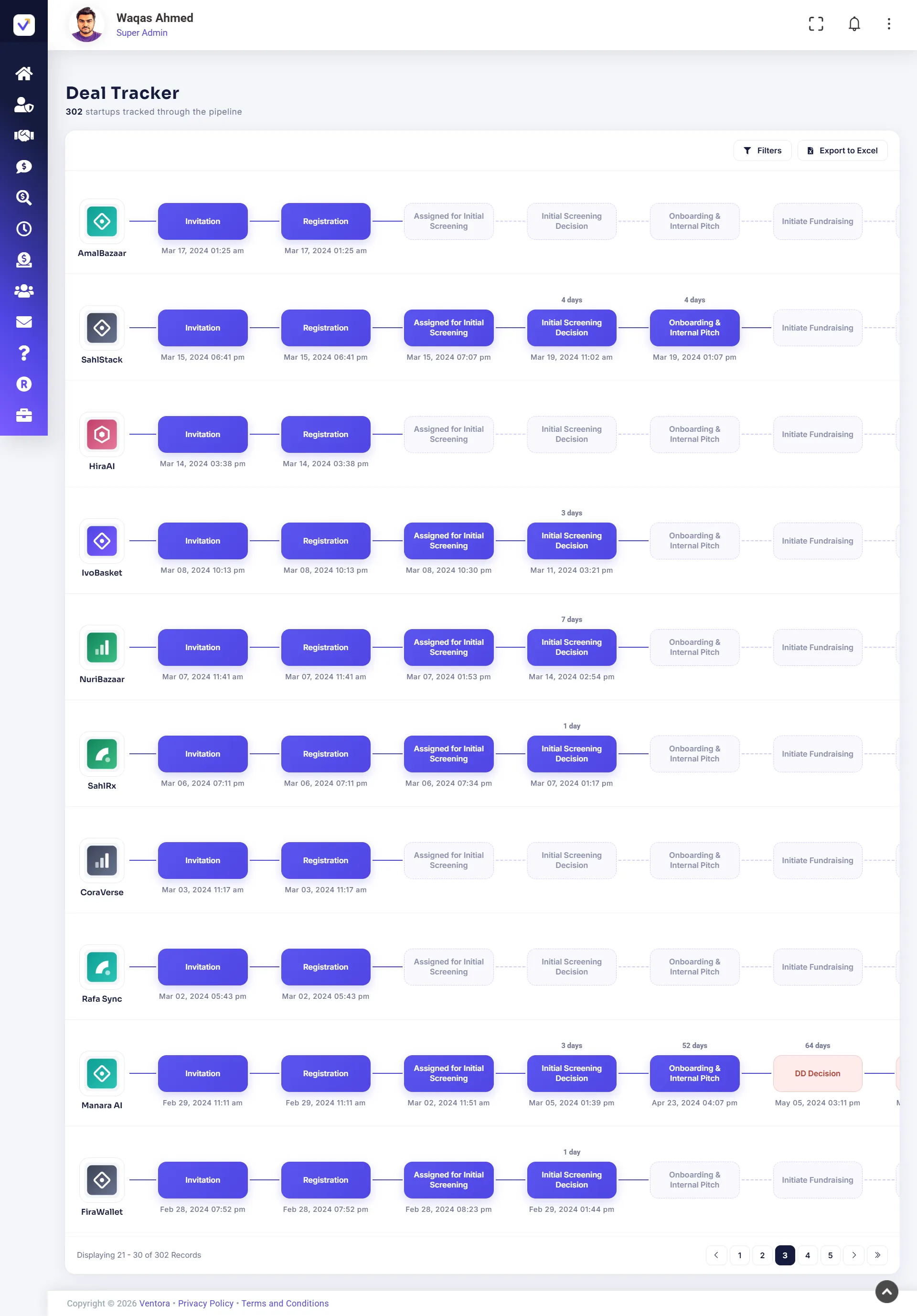
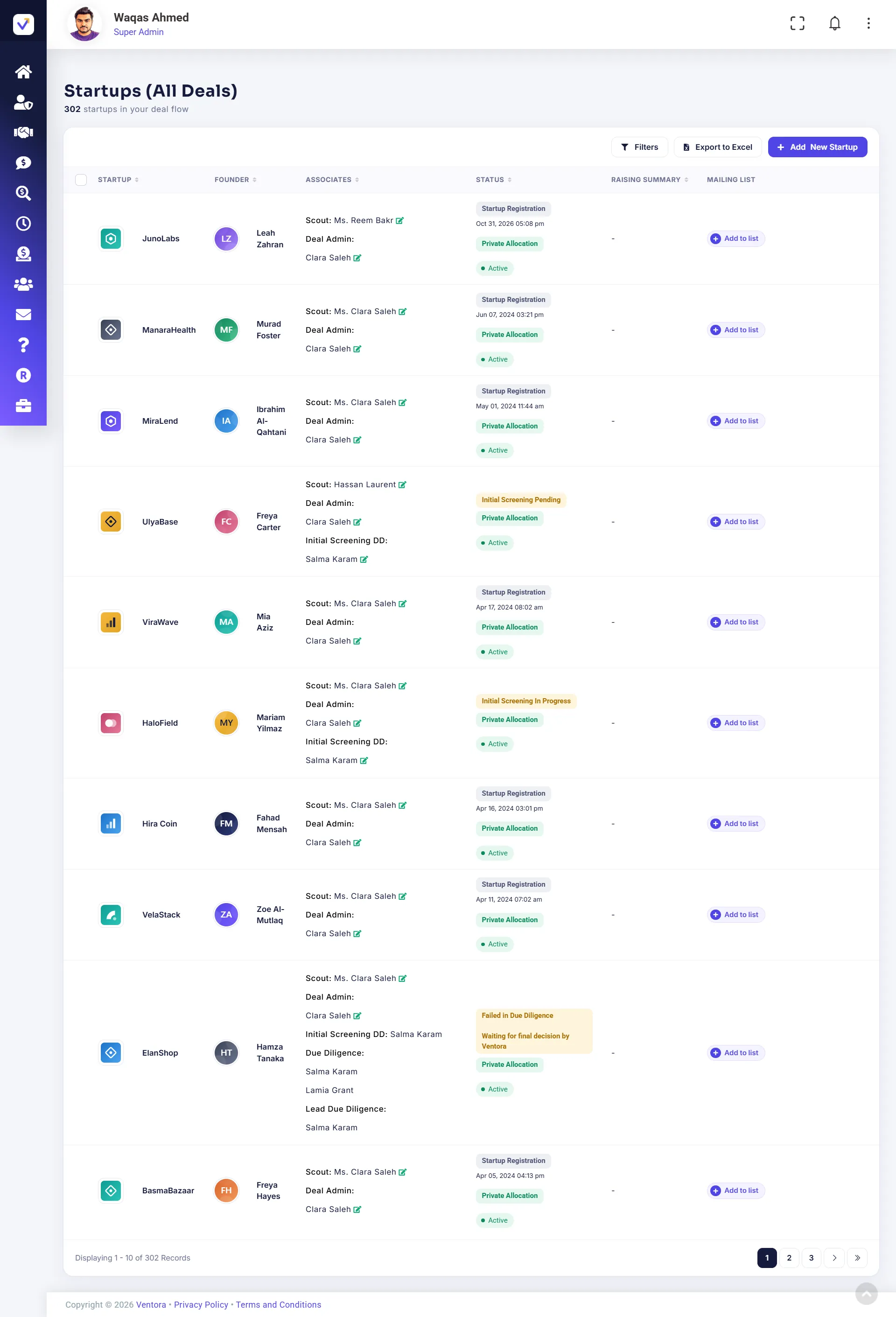
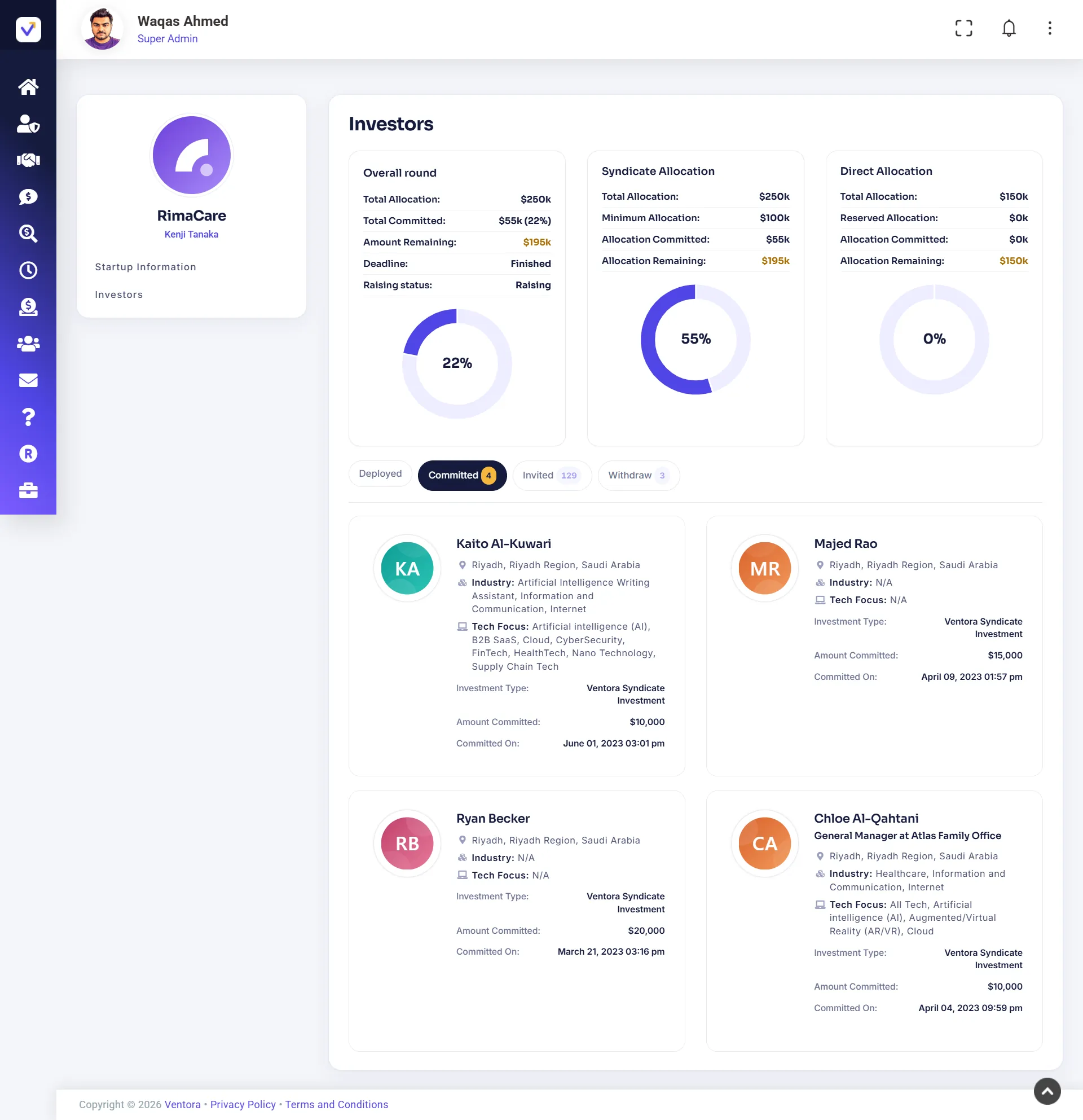
Deal admins run the pipeline
Deal admins act as the intermediary between startups and investors. Their dashboard shows where every deal stands, what is waiting for approval and which reviews are overdue, and the deal tracker turns each startup’s history into a timeline.
 — view the complete, scrollable screenshot
 — view the complete, scrollable screenshot
 — view the complete, scrollable screenshot
 — view the complete, scrollable screenshot
From pitch night to a funded round
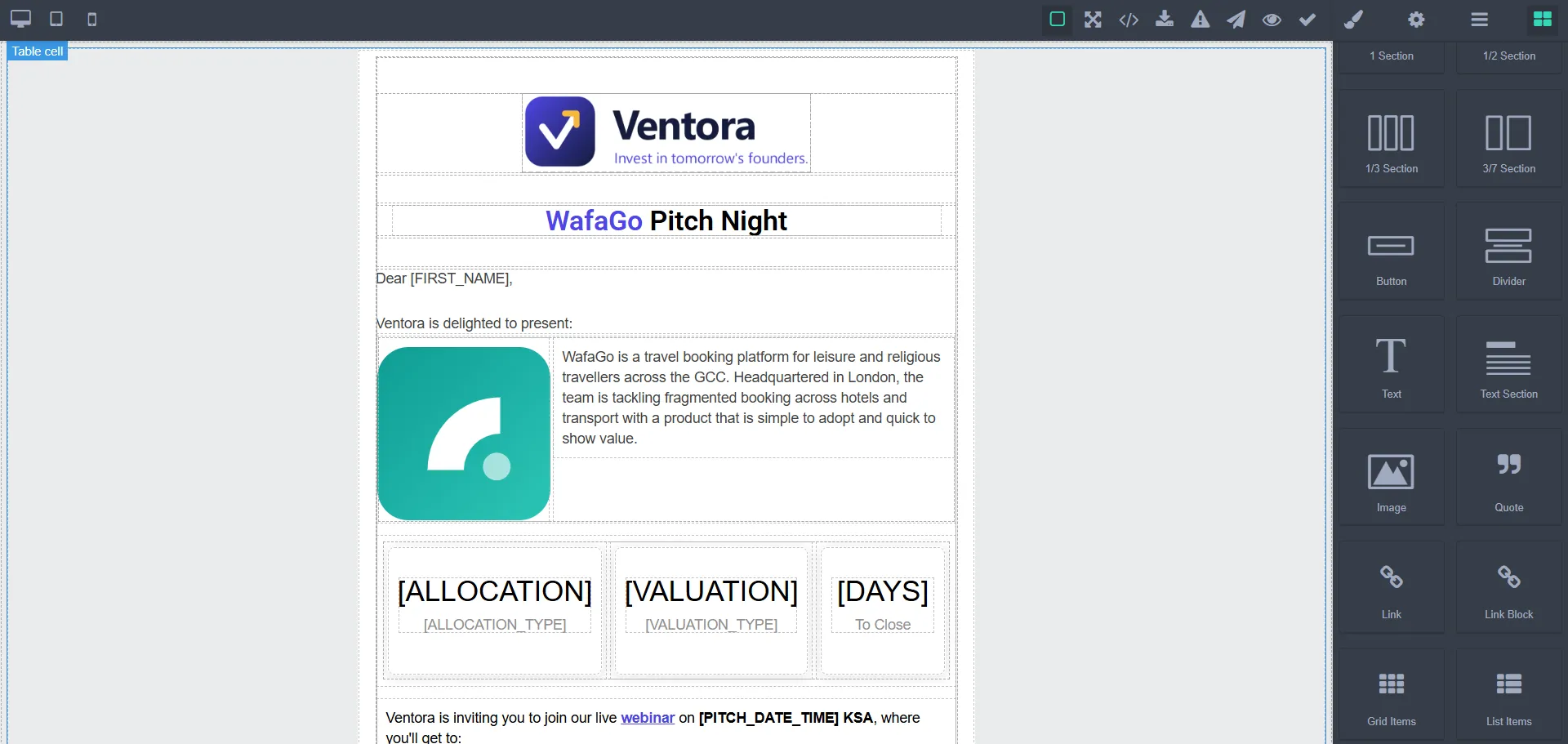
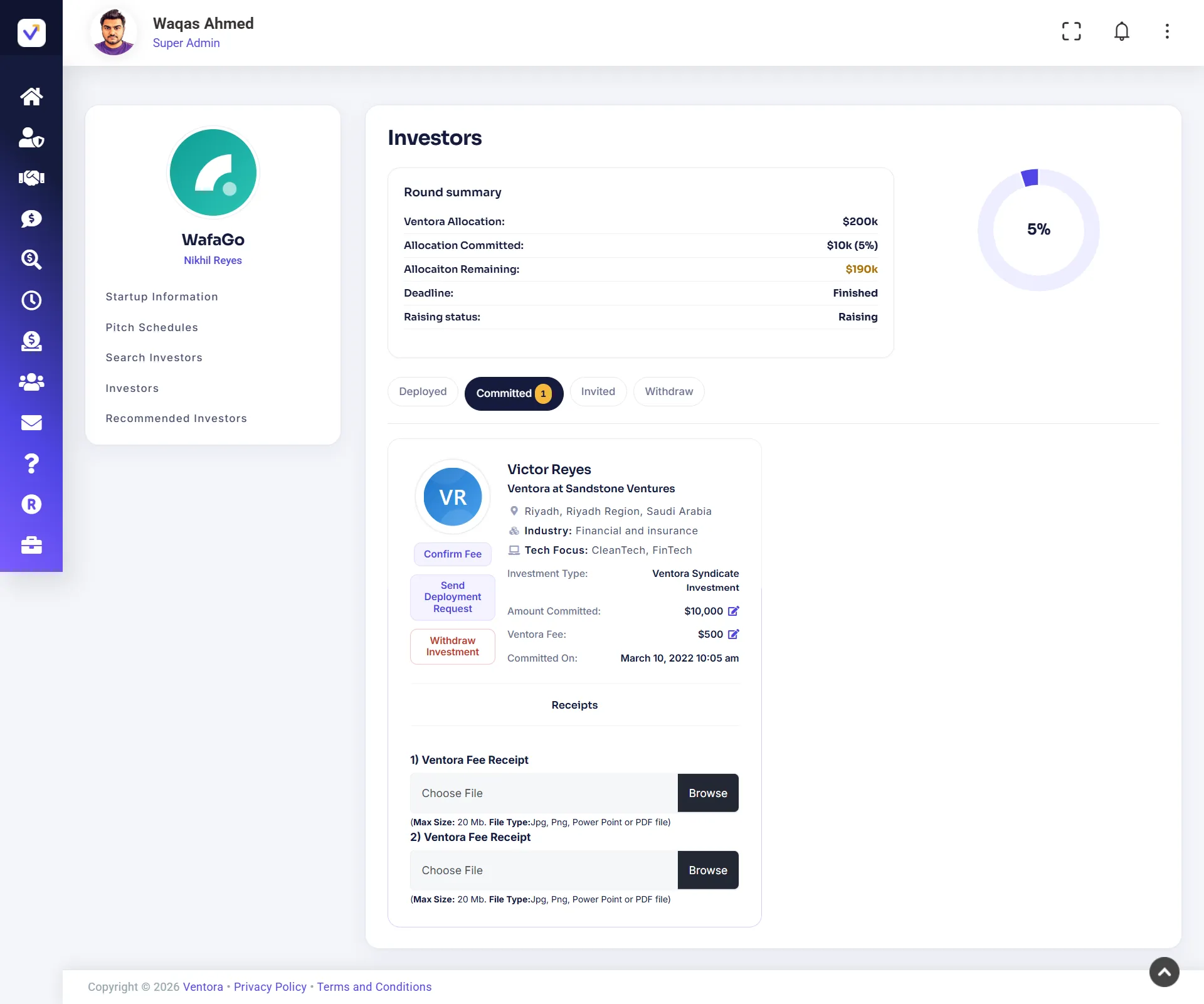
Once due diligence is approved, the deal admin schedules the pitch night, picks the investors who match the startup and sends the invitations. When the round opens, they manage commitments, fees, receipts and deployment requests for each investor.
 — view the complete, scrollable screenshot
 — view the complete, scrollable screenshot
 — view the complete, scrollable screenshot
 — view the complete, scrollable screenshot
 — view the complete, scrollable screenshot
 — view the complete, scrollable screenshot
 — view the complete, scrollable screenshot
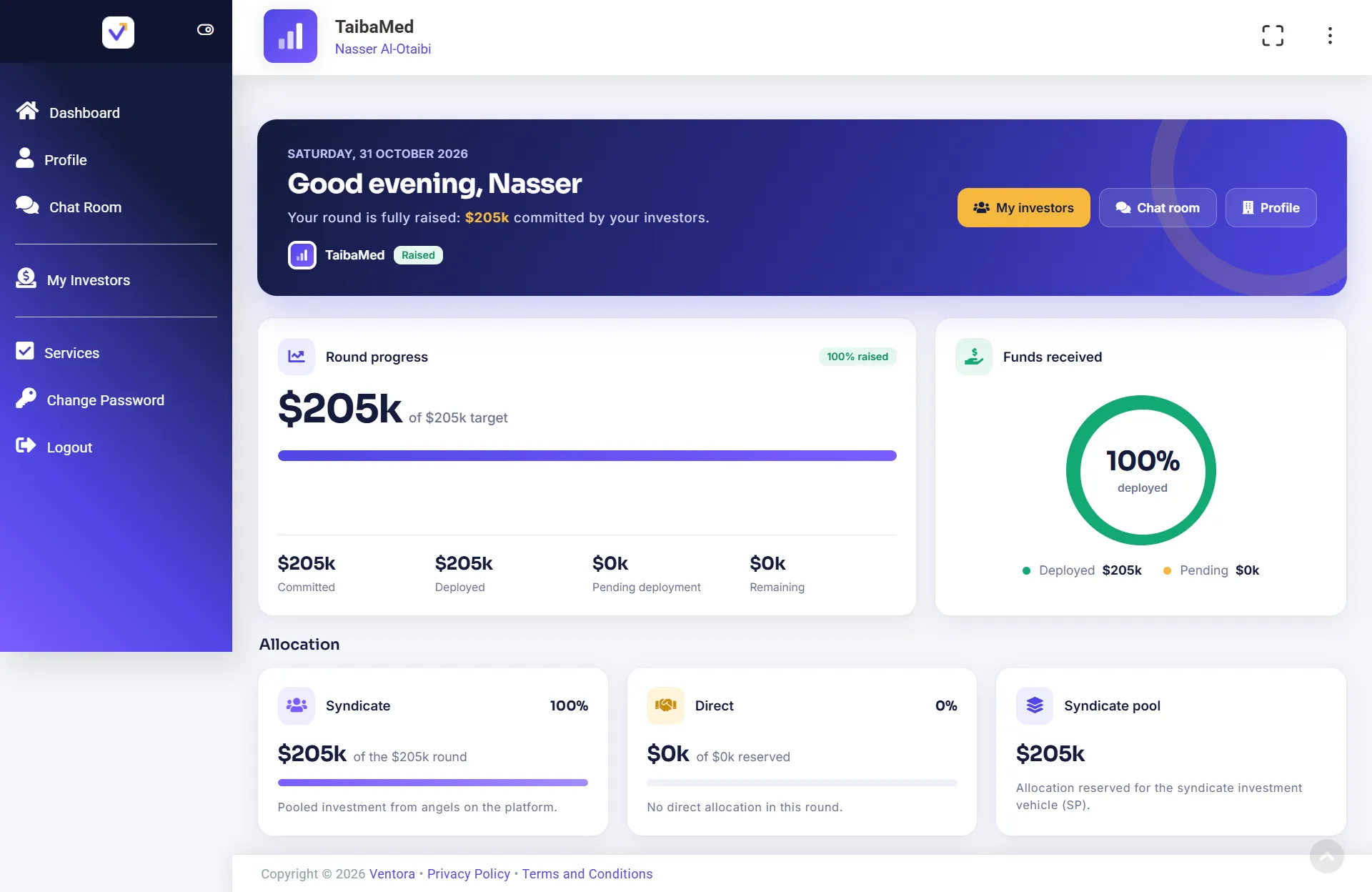
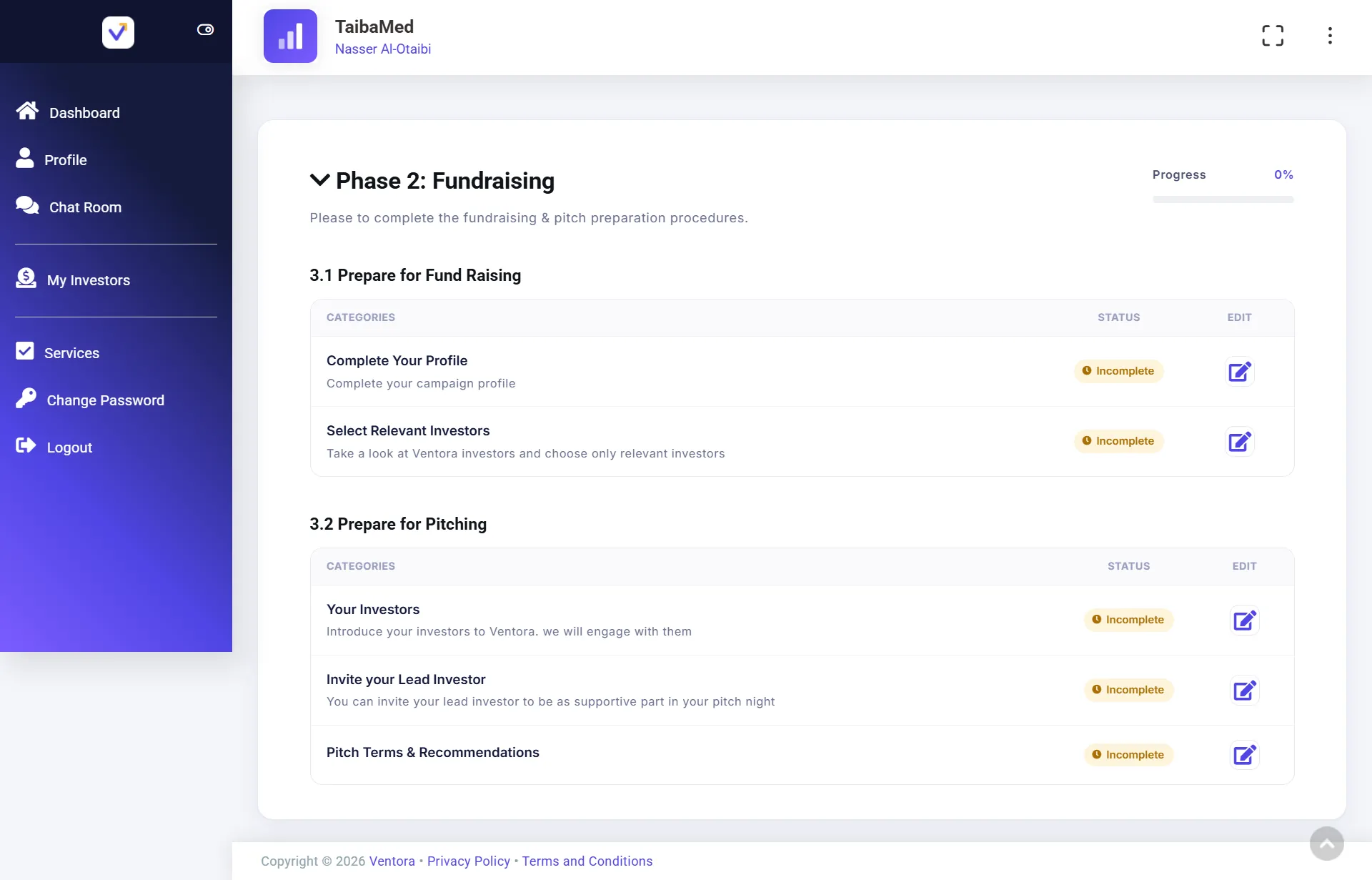
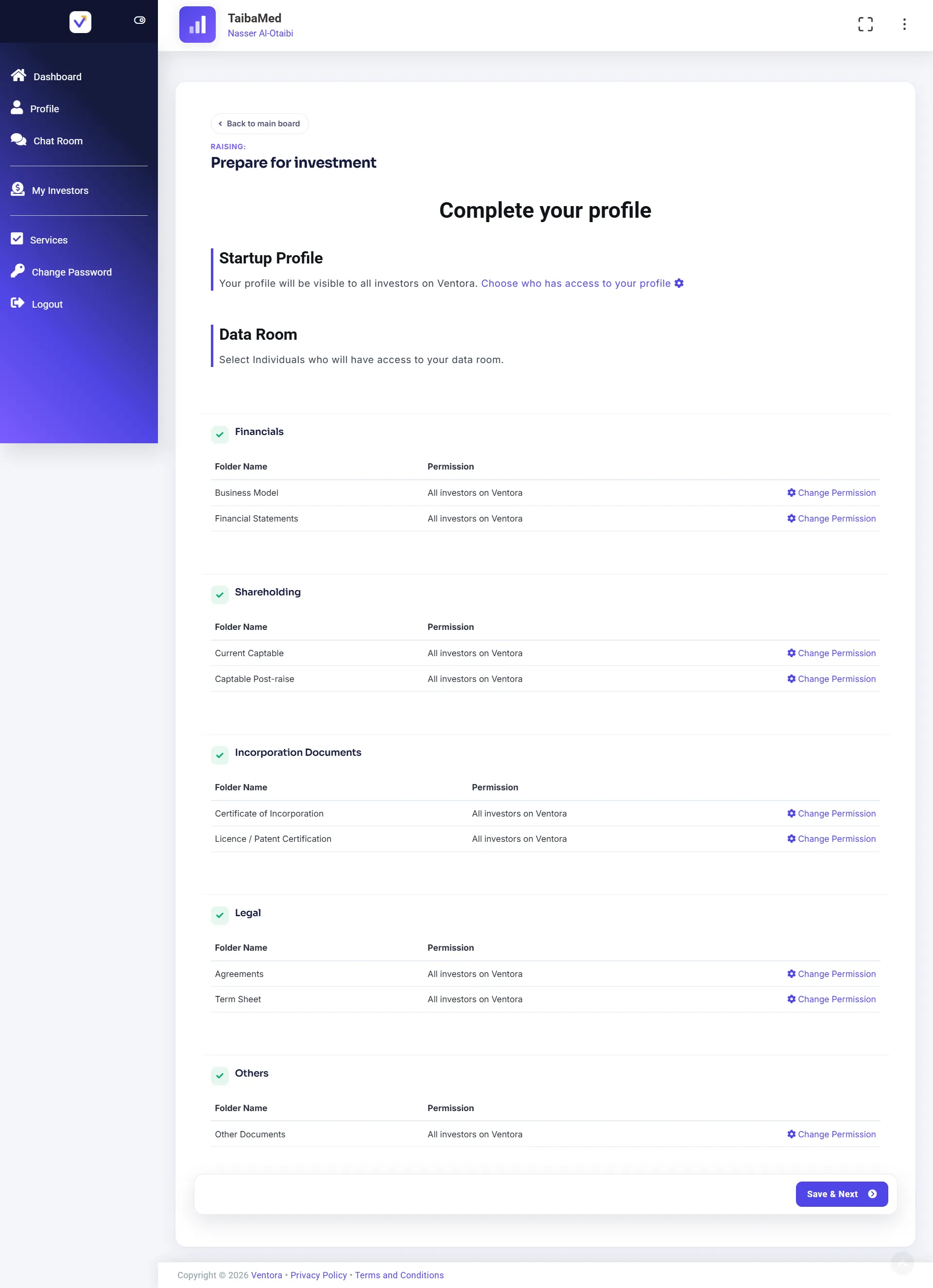
Founders follow their round
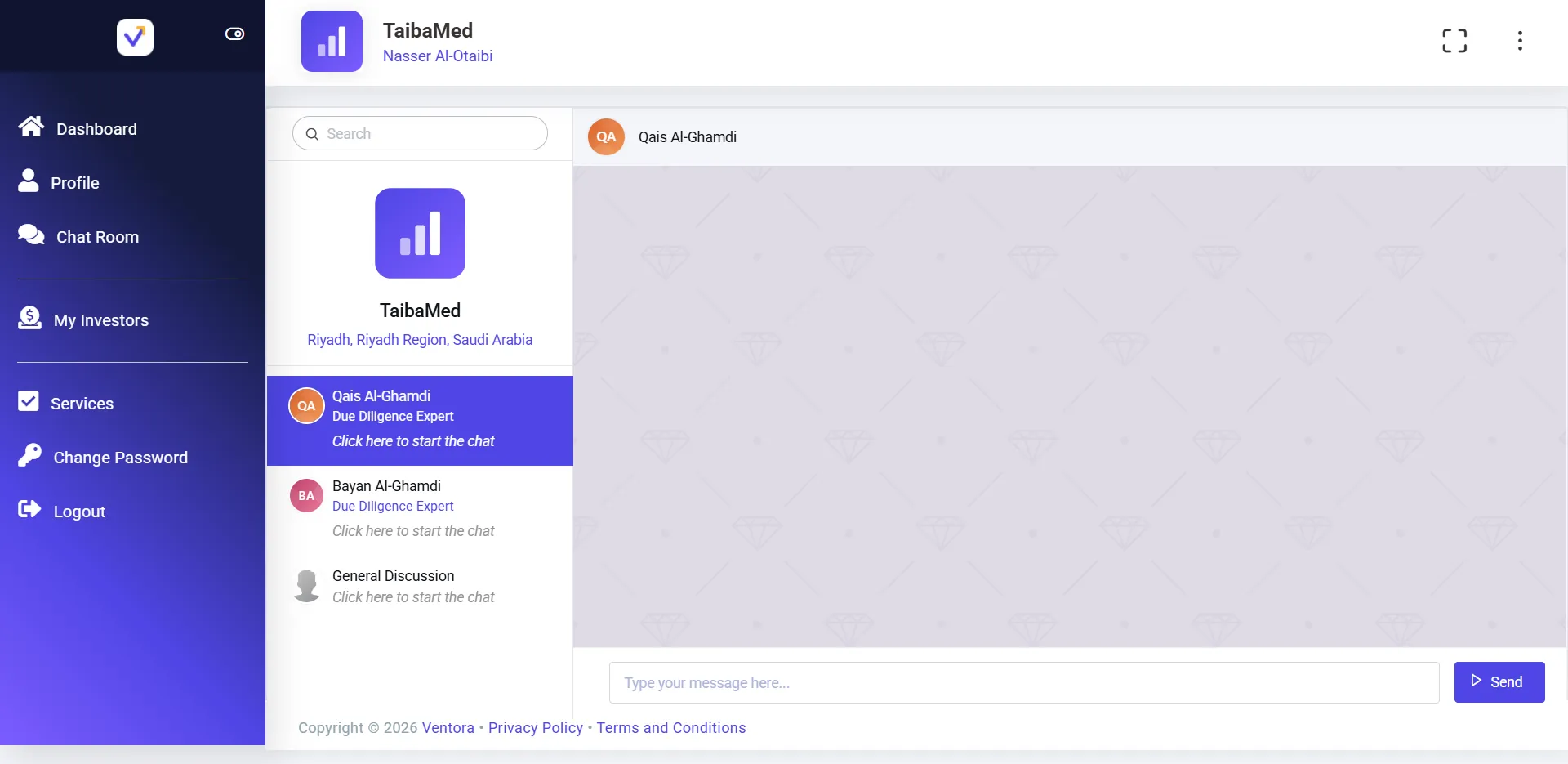
During fundraising the founder sees the round fill in real time, prepares the campaign, chooses who can open each data room folder and talks with their experts in the platform’s chat room.
 — view the complete, scrollable screenshot
 — view the complete, scrollable screenshot
 — view the complete, scrollable screenshot
 — view the complete, scrollable screenshot
 — view the complete, scrollable screenshot
Investors invest with KYC done once
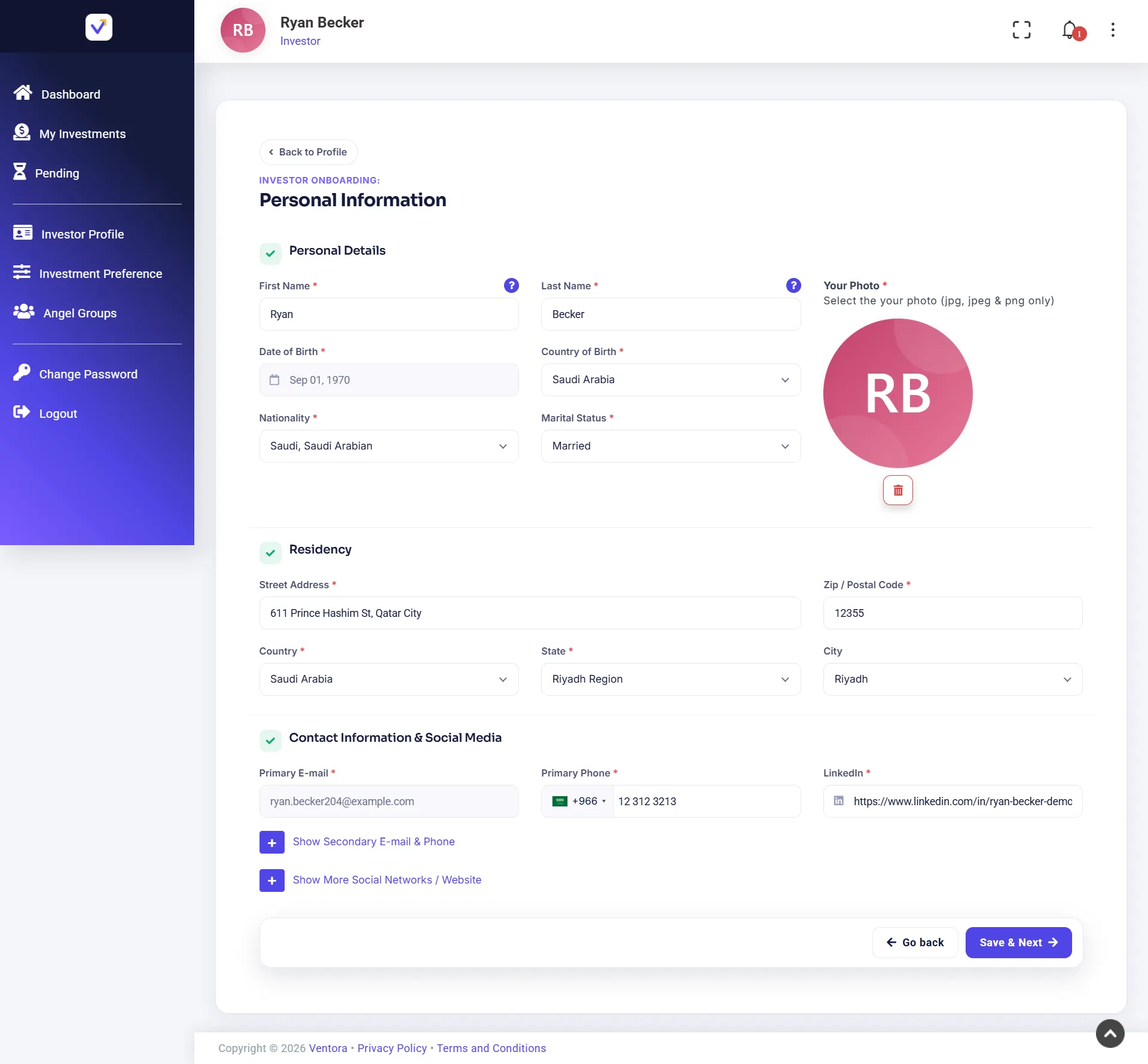
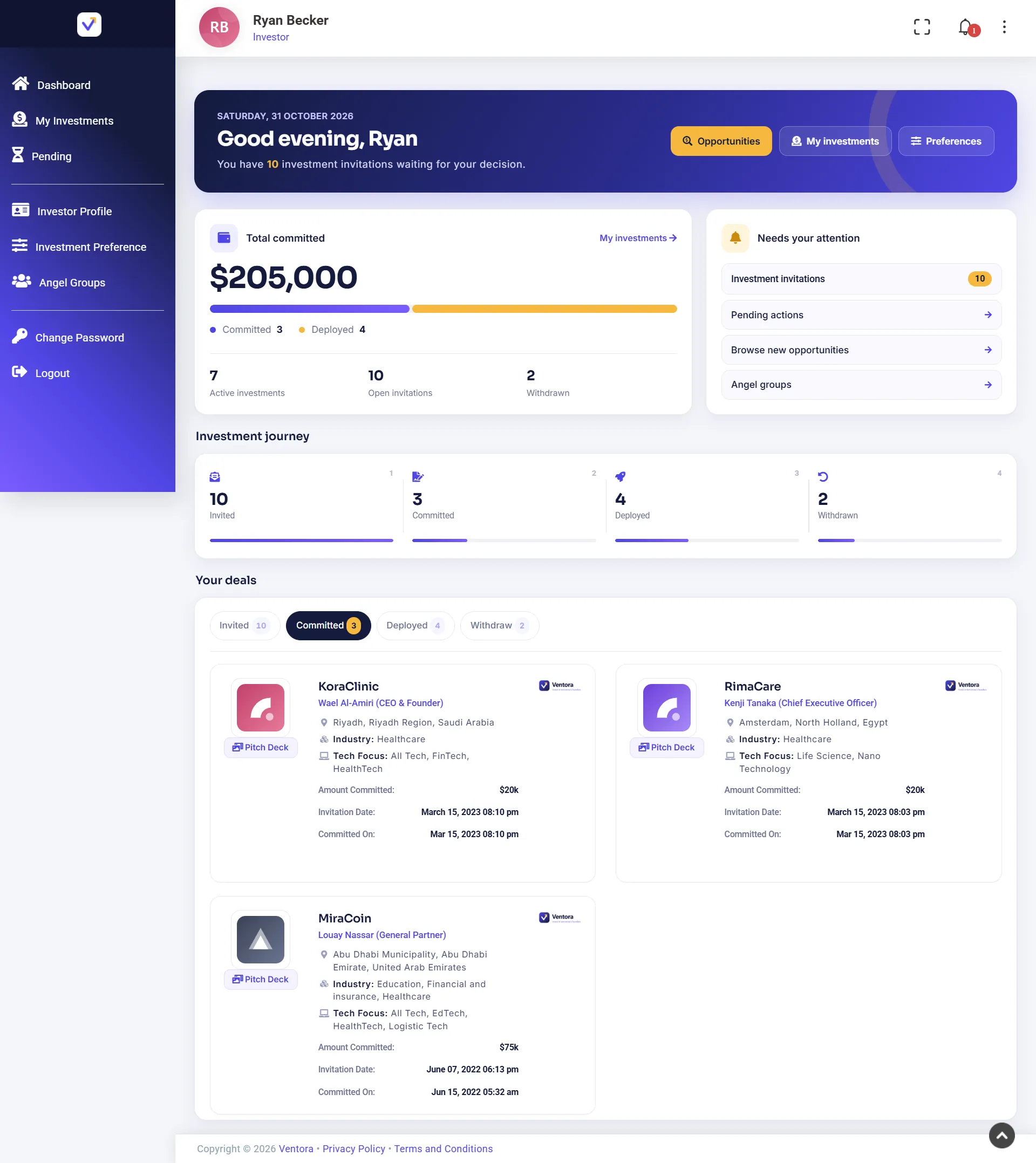
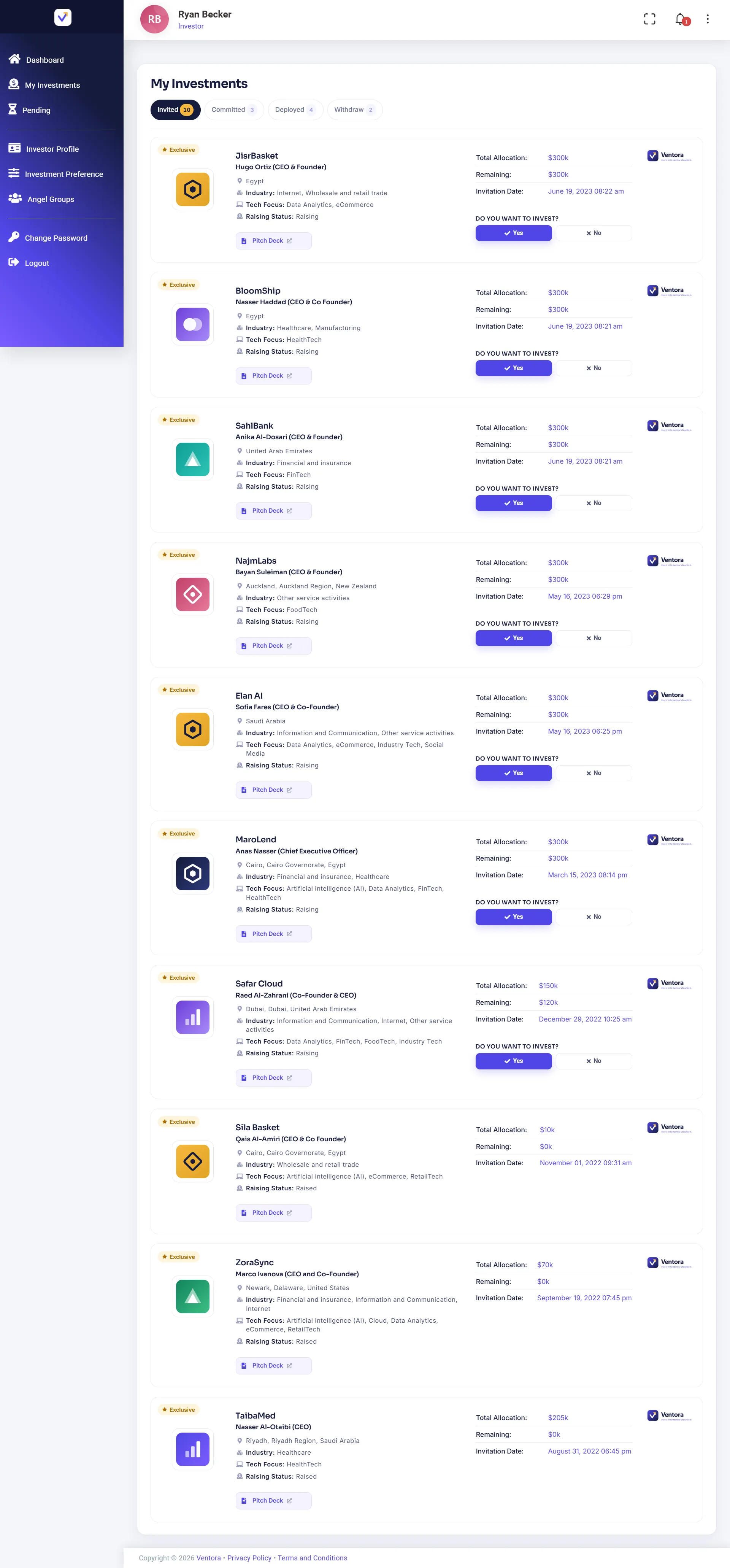
Investors complete onboarding once, including KYC and accreditation, before they receive any deal. After that, the platform brings deals to them: exclusive invitations with a clear yes or no, commitments that pool until the round can close, and a complete record of every investment.
 — view the complete, scrollable screenshot
 — view the complete, scrollable screenshot
 — view the complete, scrollable screenshot
 — view the complete, scrollable screenshot
 — view the complete, scrollable screenshot
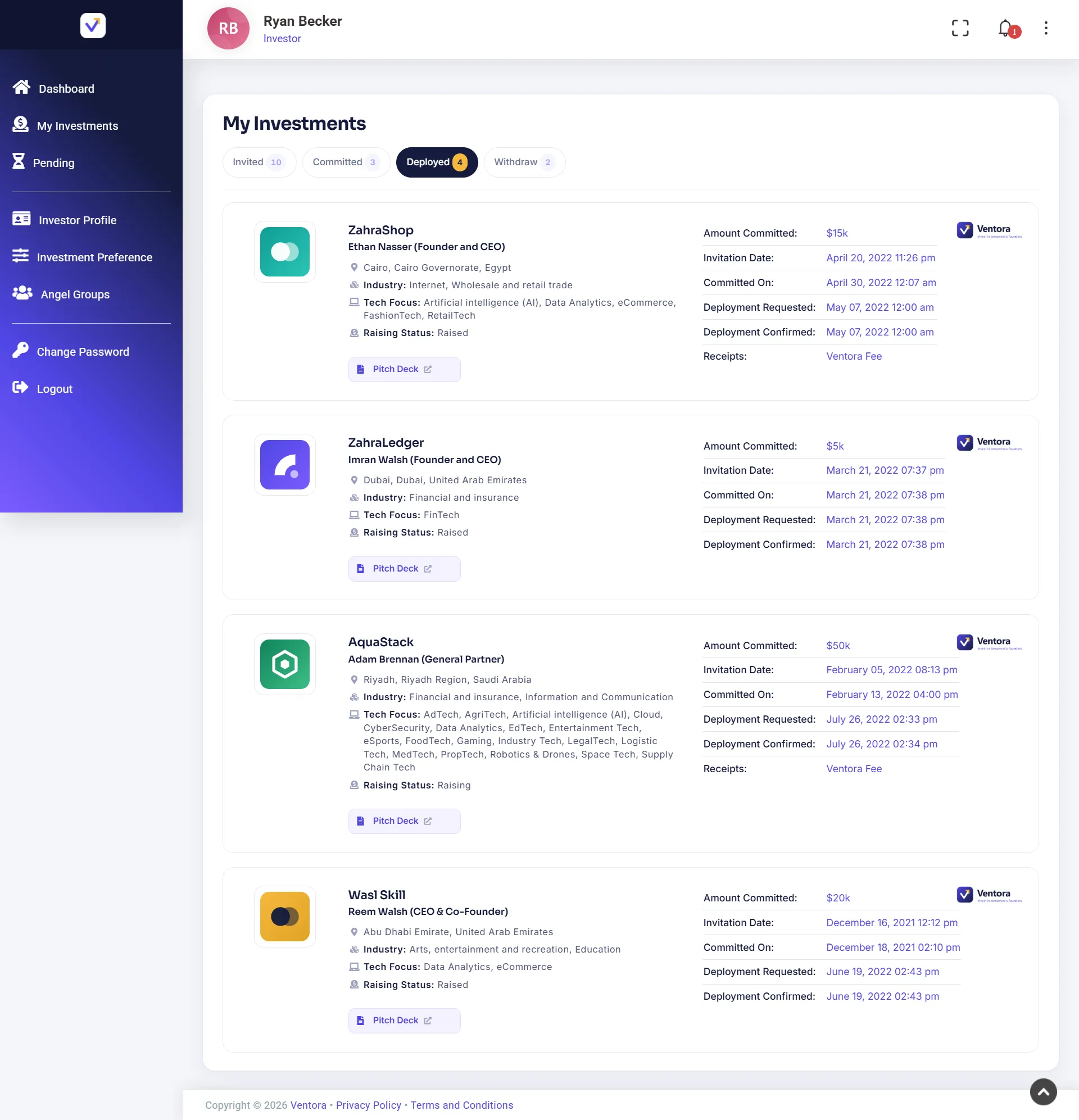 — view the complete, scrollable screenshot
The network behind the deals
The platform also manages the people who find and support the deals: associates with one or more roles, investors and angel groups, and the internal team.
Associates: scouts, investor finders and experts
One associate account can hold several roles. Each associate onboards once, agrees to the platform's terms and earns a commission on the deals or investors they bring.
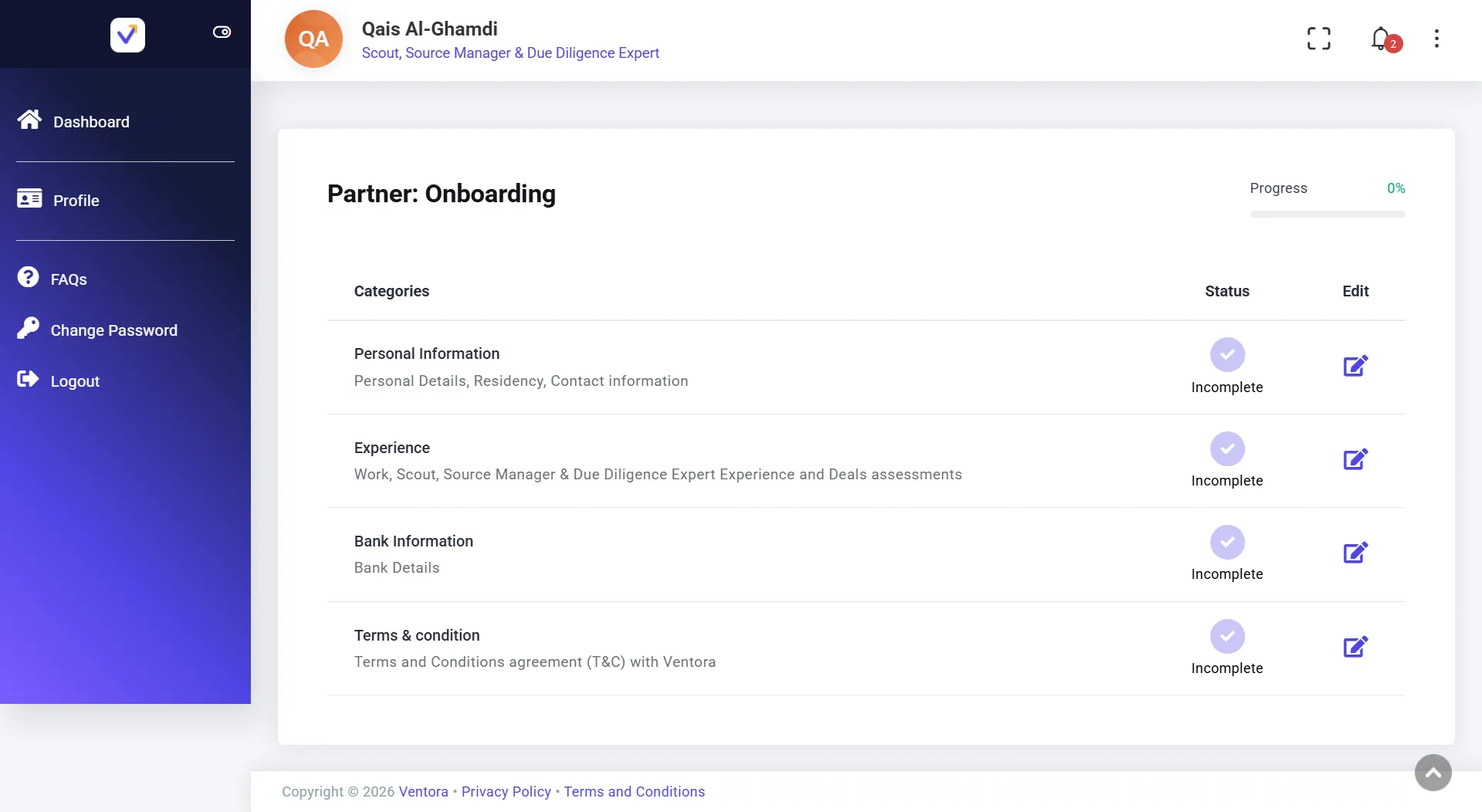 — view the complete, scrollable screenshot
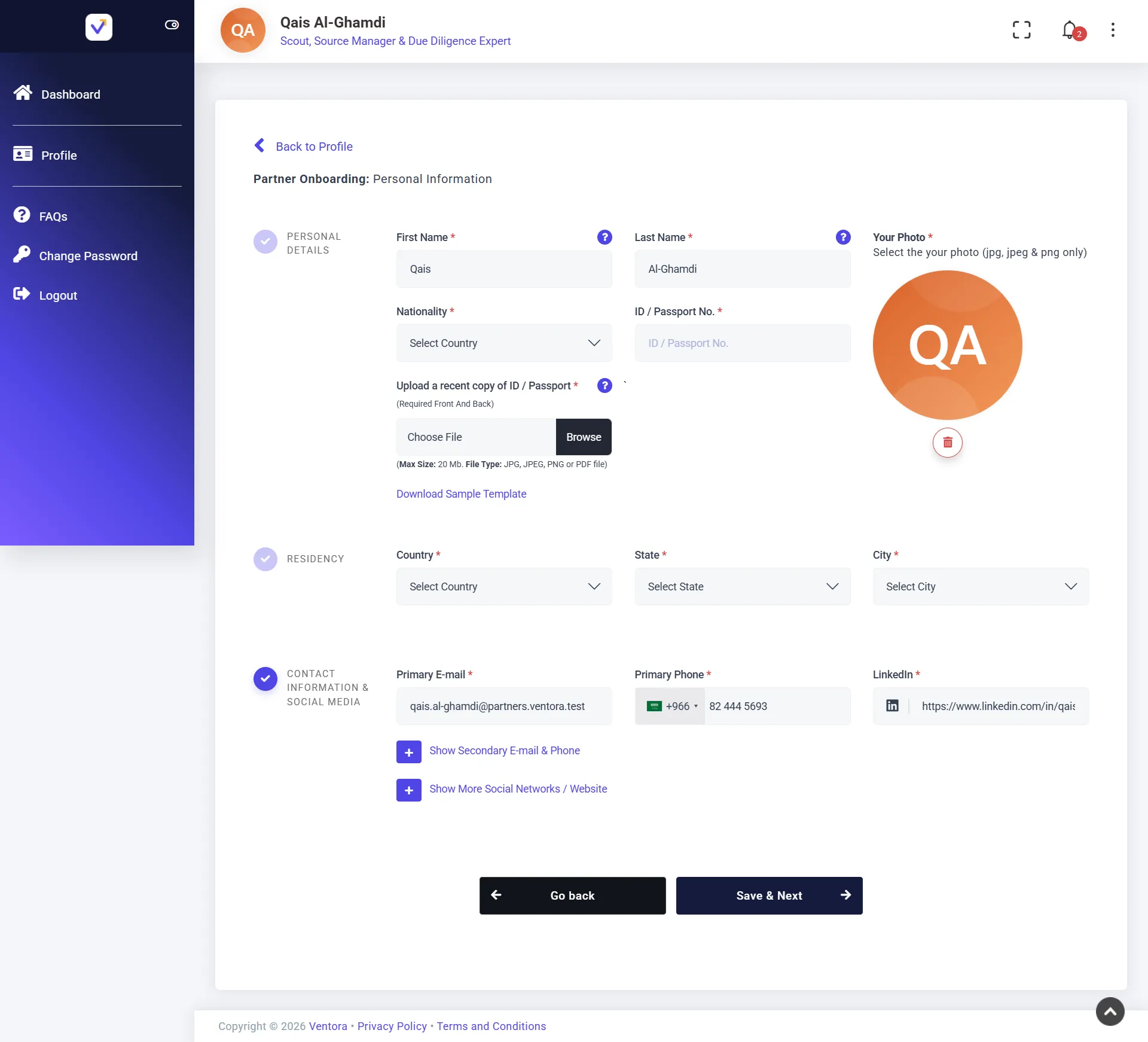 — view the complete, scrollable screenshot
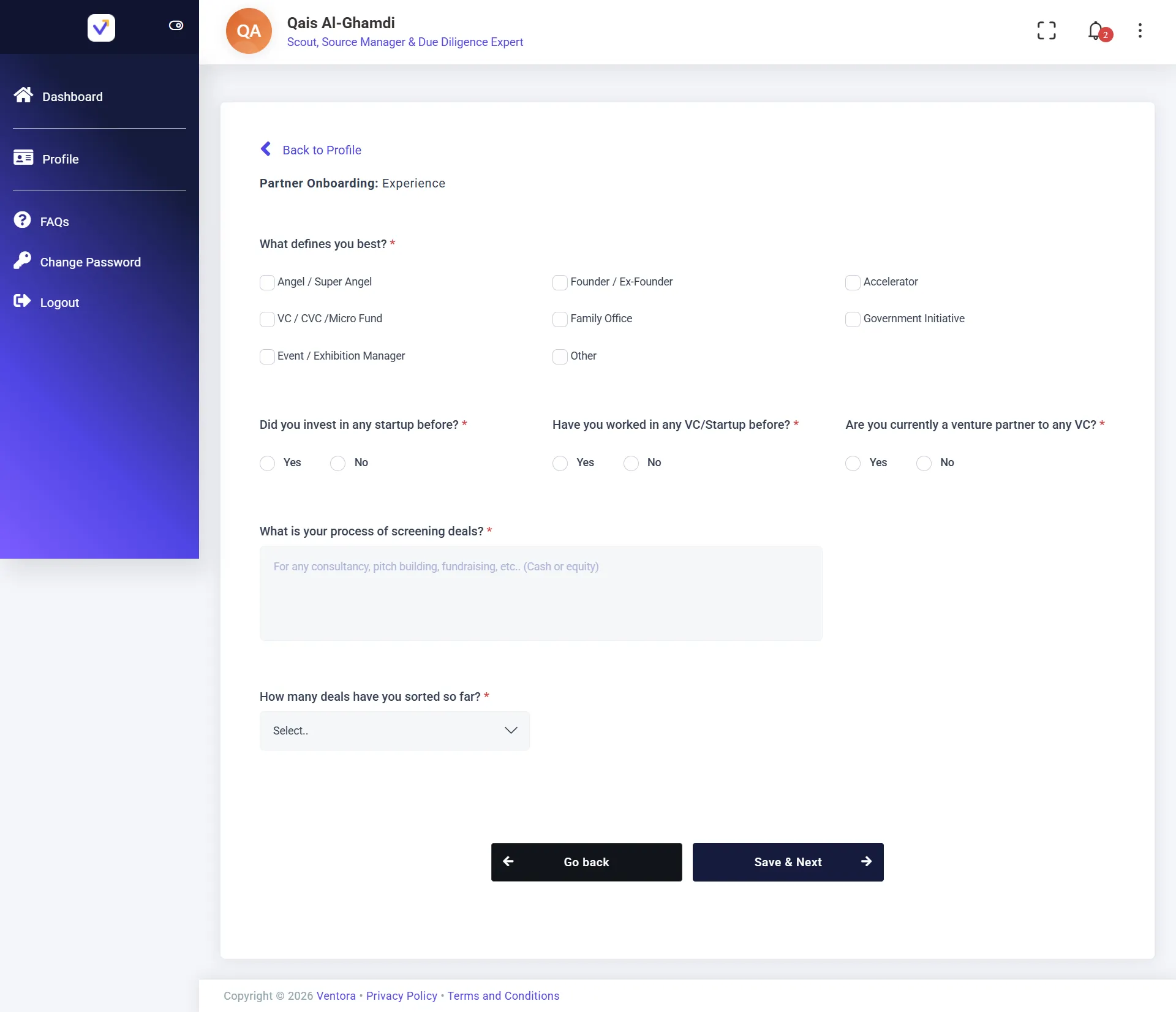 — view the complete, scrollable screenshot
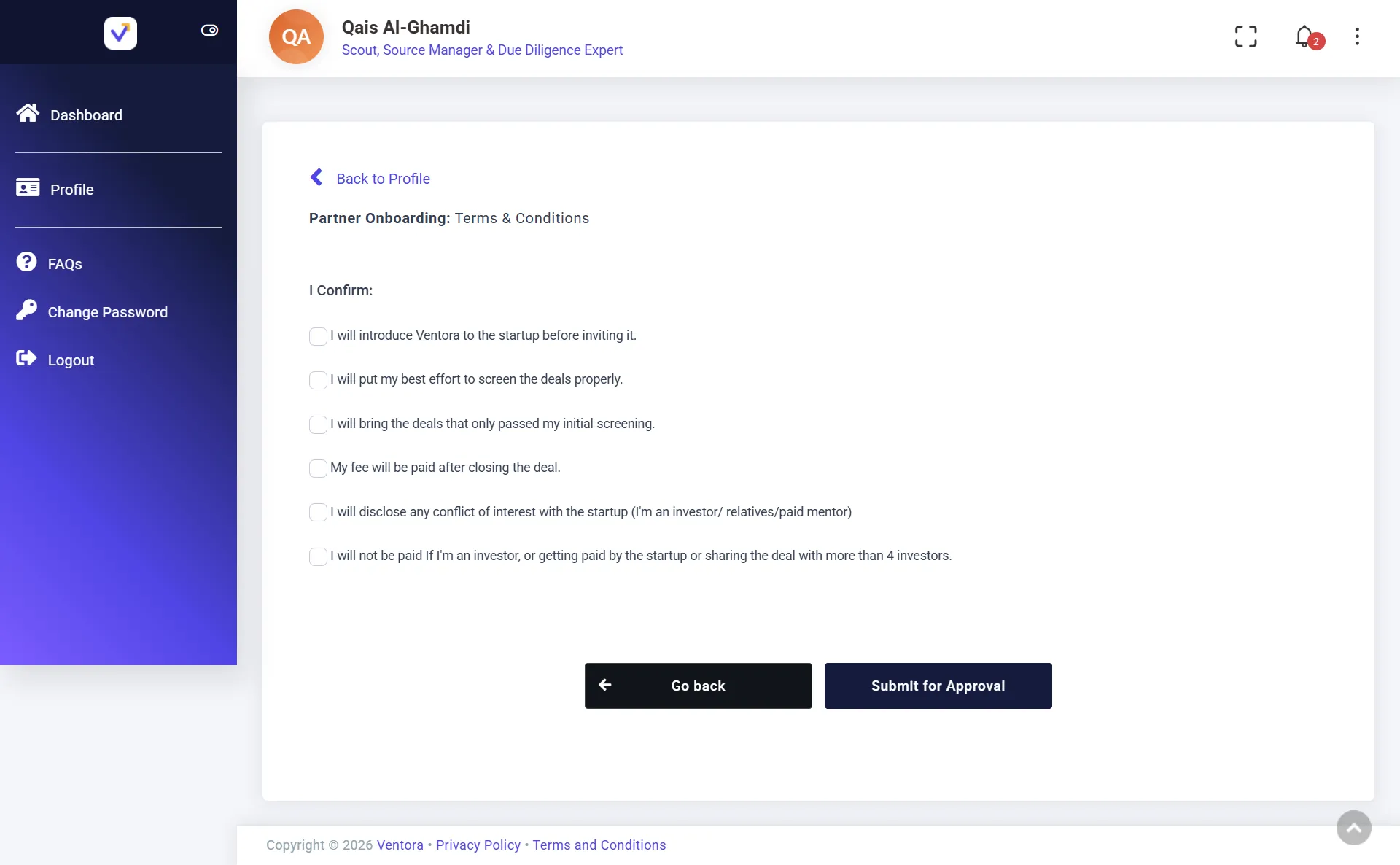 — view the complete, scrollable screenshot
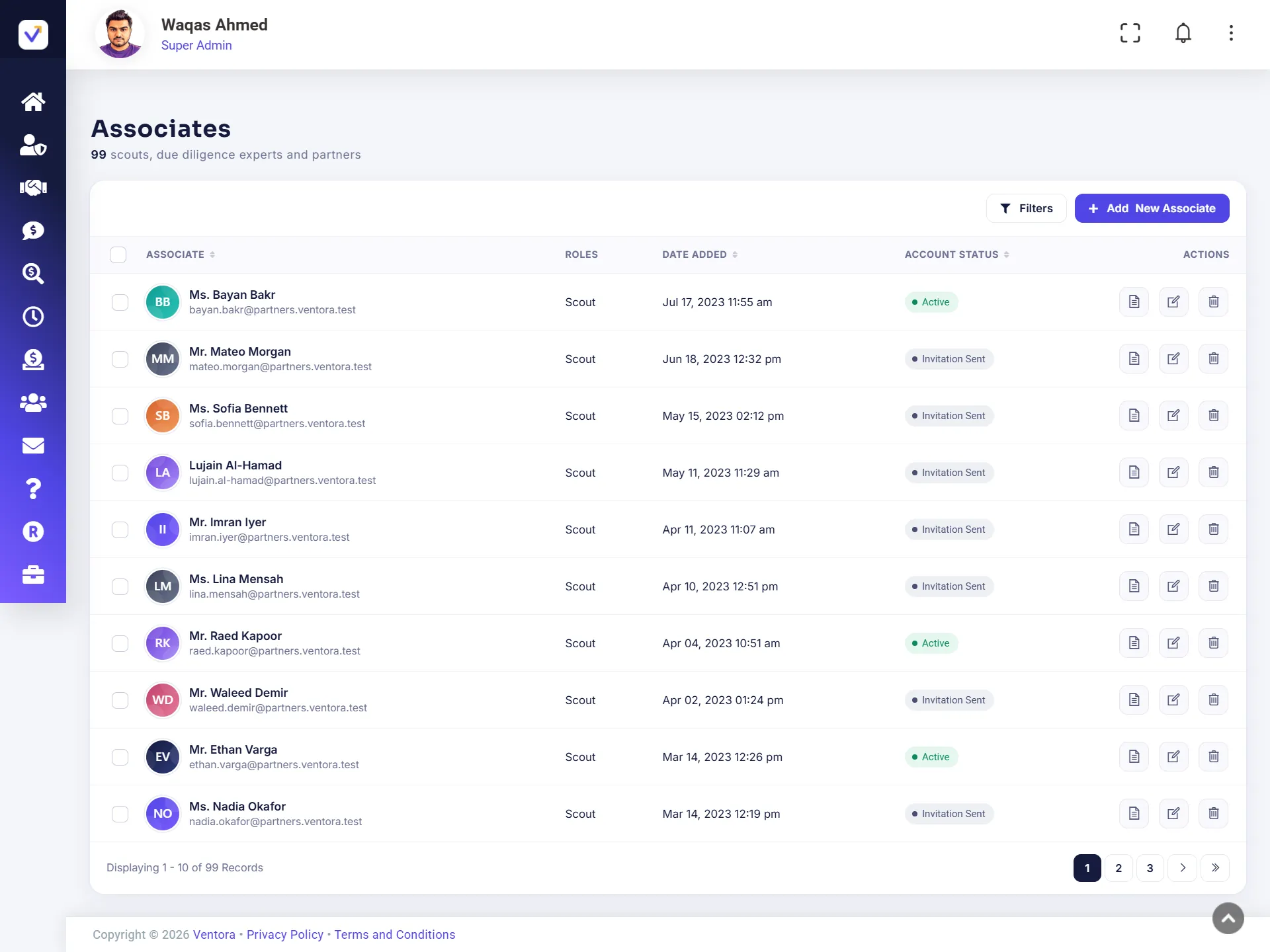 — view the complete, scrollable screenshot
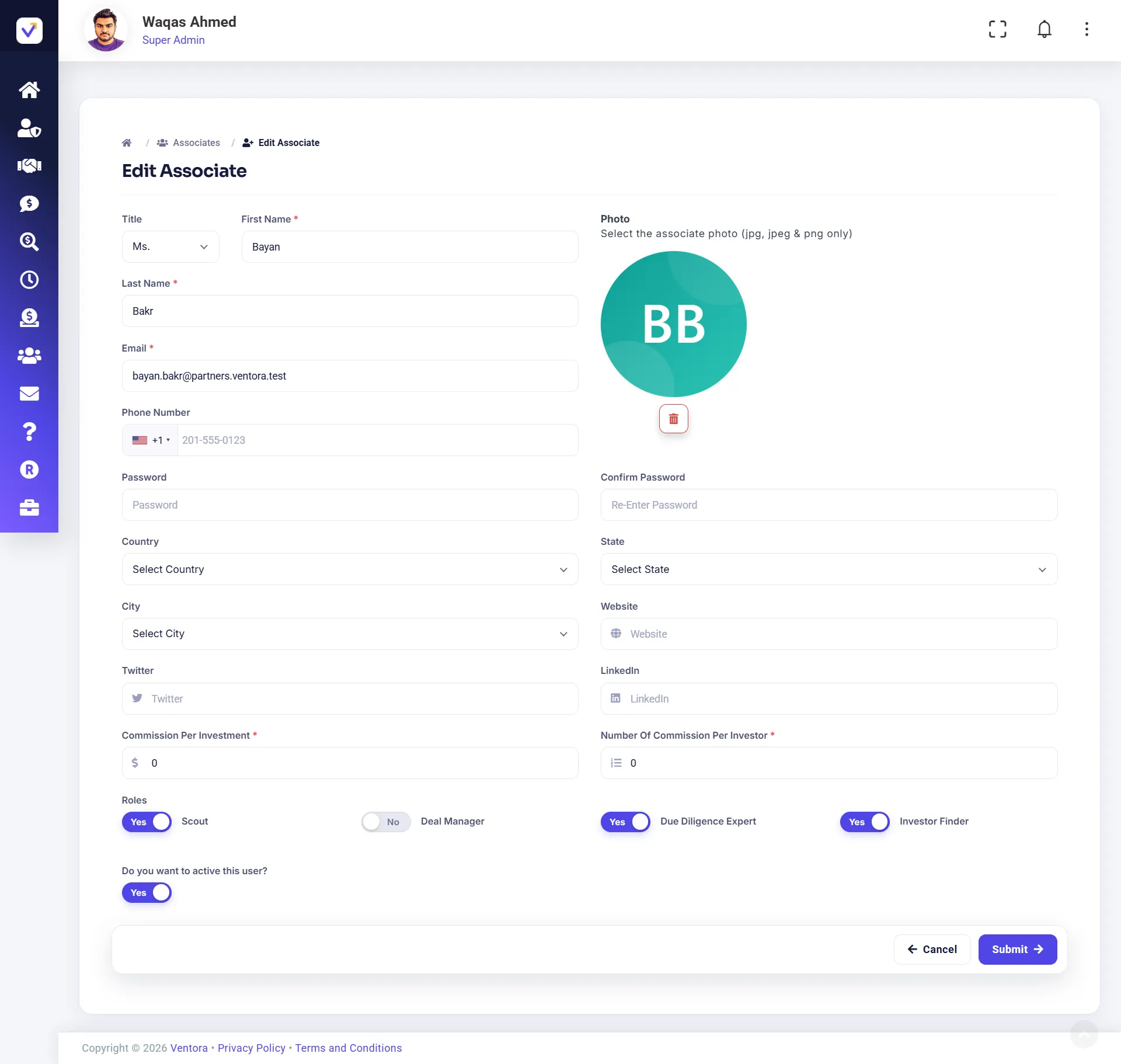 — view the complete, scrollable screenshot
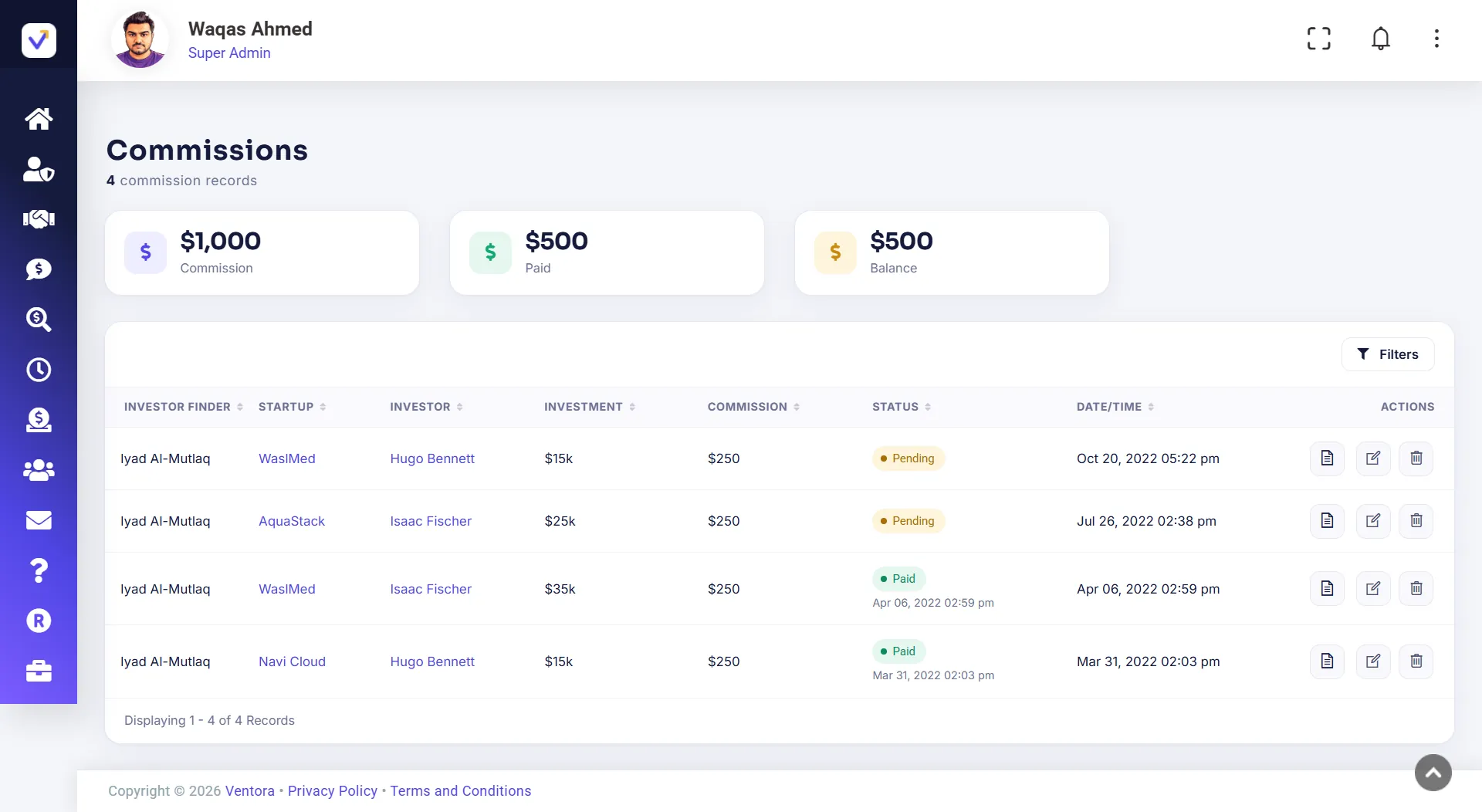 — view the complete, scrollable screenshot
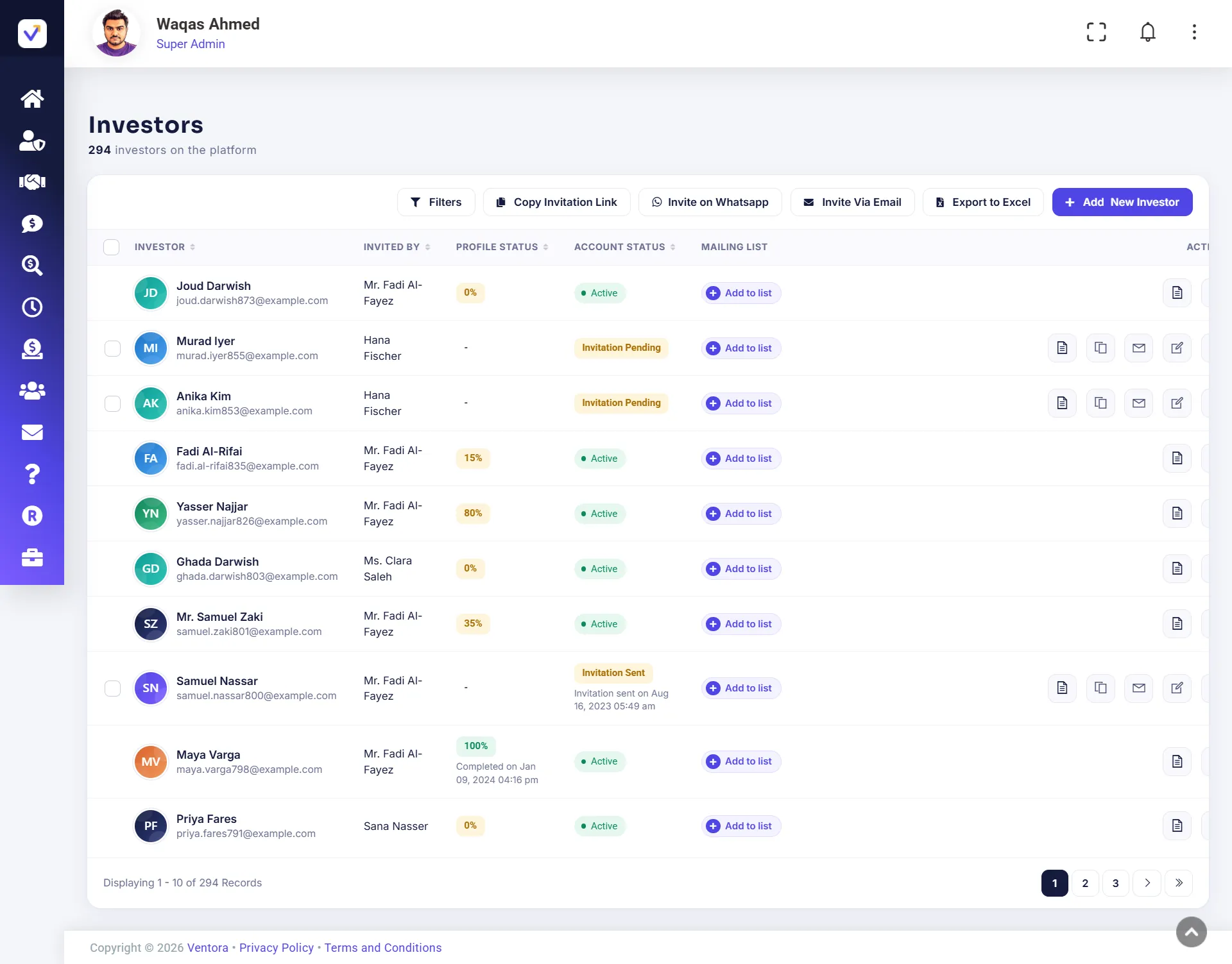
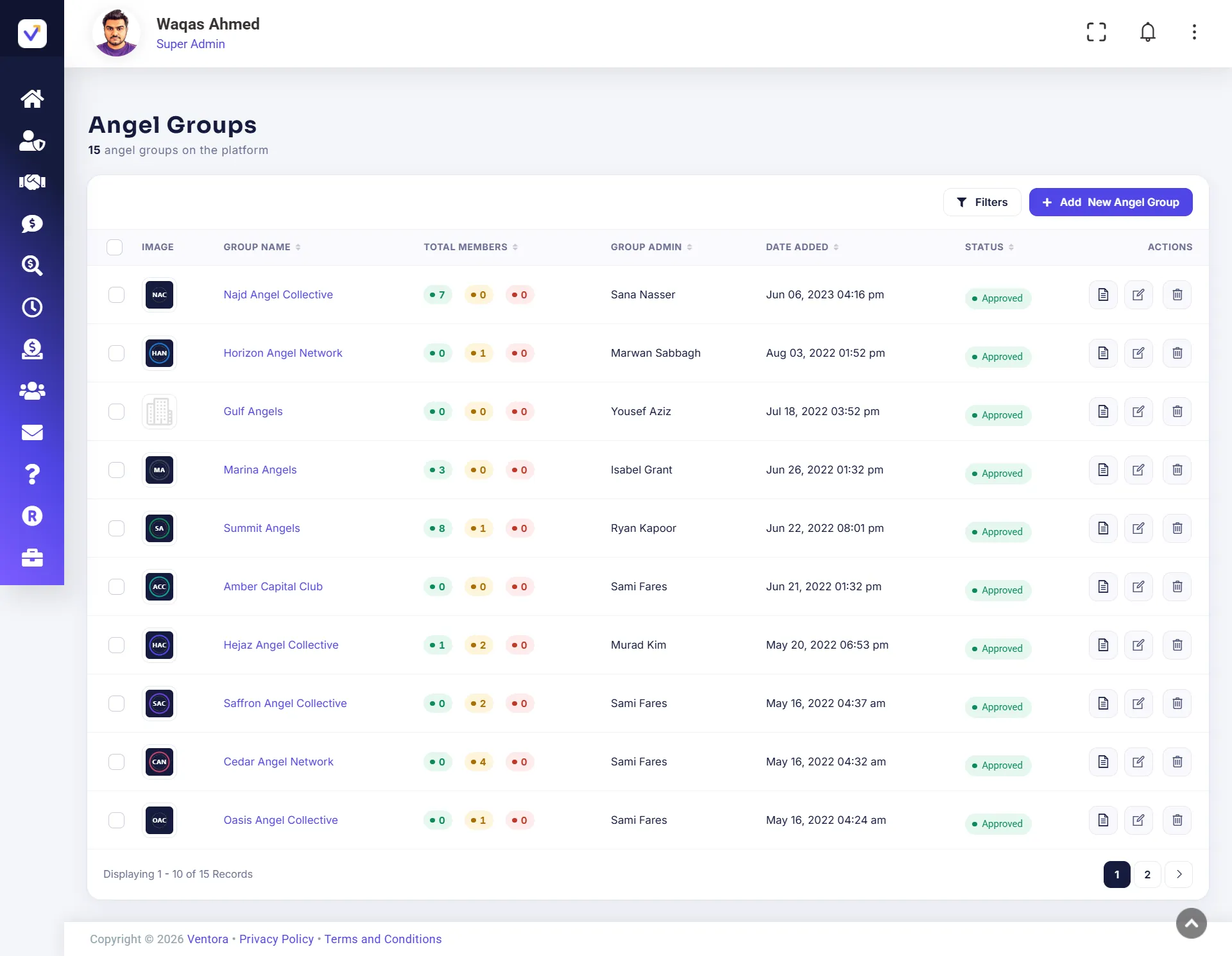
Investors and angel groups
Administrators invite investors individually or in bulk, and angel groups let a group admin bring members who invest together.
 — view the complete, scrollable screenshot
 — view the complete, scrollable screenshot
 — view the complete, scrollable screenshot
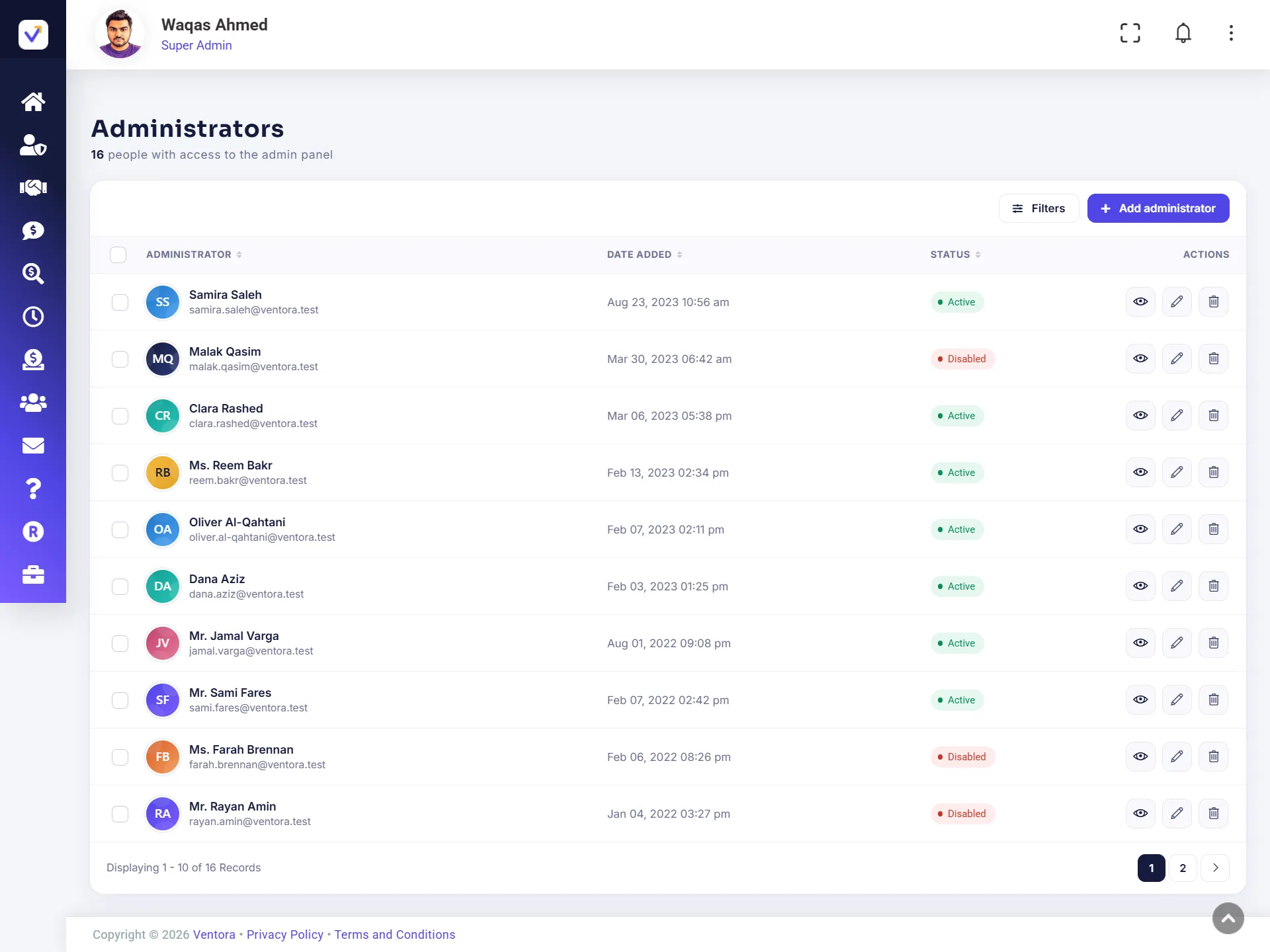
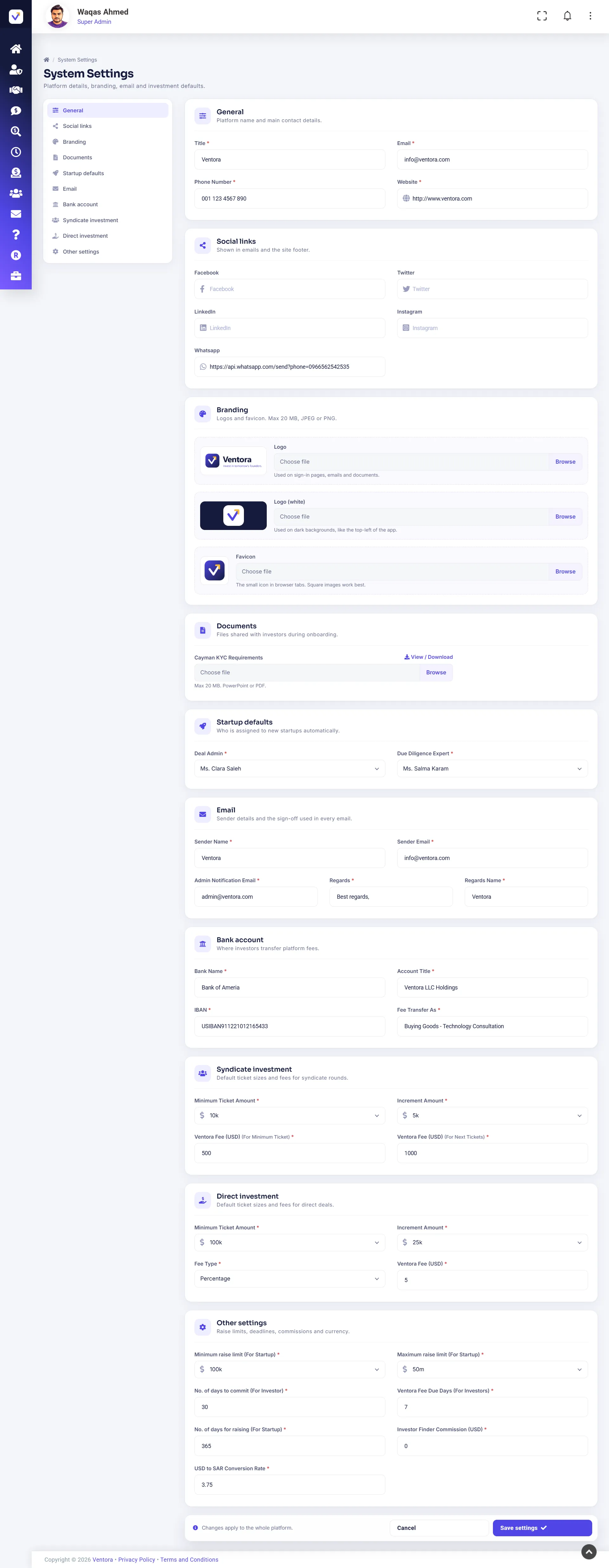
Platform administration
Super admins manage the team and the rules every round runs on, without a code change.
 — view the complete, scrollable screenshot
 — view the complete, scrollable screenshot
The screenshots show the platform under the Ventora name and theme used for this case study, with sample startups, investors and amounts. The structure, workflow and features are those of the real product.
Integrations
Four services connect Ventora to the rest of the client’s business. Each one is called from a specific event in the deal lifecycle, so the integrations stay predictable and easy to trace.
Engineering decisions worth explaining
One account, several roles
An associate can be a scout, investor finder, deal manager and due diligence expert at once. Permissions follow the roles switched on for the account rather than separate logins, and each role adds its own menu and queues.
A data room that checks every file
Data room files are never served from a public path. Each request checks the viewer’s access to that startup and folder first; videos stream with byte ranges, and pitch decks in PowerPoint or PDF are converted for viewing in the browser.
The status is the source of truth
Each startup carries one status, from “Invitation Sent” to “Raised” or “Investment Failed”. Dashboards, the deal tracker, permissions and emails all read from it, so every screen agrees on where a deal is.
Scheduled jobs keep deals moving
Cron jobs send sign-up, review and tax reminders, chase due diligence experts before and after deadlines, close rounds whose deadline has passed, work through the email queue and re-check KYC documents.
Rules live in settings, not code
Ticket sizes, fees for syndicate and direct investment, days to commit, raise limits, default assignees and currency rates are all editable by super admins, so a policy change does not need a release.
Commission tied to the introducer
Because every startup and investor records who brought them in, commissions for scouts and investor finders are calculated from closed investments rather than claimed by hand.
Built with
Application
- PHP
- CodeIgniter
- MySQL
- jQuery
- Bootstrap
- Select2
- Dropzone
Integrations
- KYC API
- Odoo (contacts, CRM, portal SSO)
- Google Firebase
- Mailgun
- LinkedIn sign-in
- WhatsApp invitations
- reCAPTCHA
Platform services
- Role-based access
- Protected data room
- GrapesJS email editor
- CKEditor
- Document conversion
- PDF and Excel exports
- Scheduled jobs and queues
Related services: Custom Web Applications, Technical Support & Maintenance.
Building a fundraising platform: common questions
What features does a startup fundraising platform need?
At its core: controlled access for startups and investors, a structured application, screening and due diligence tools, a secure data room, a way to present deals to investors, and round management that tracks commitments, allocations, fees and deployment. Ventora adds pitch nights, angel groups, syndicate and direct allocations, scout and investor-finder commissions, and integrations for KYC, Odoo, Firebase and Mailgun.
How does an invite-only investment platform control who can join?
Every account starts from an invitation. In Ventora, startups and investors join through encrypted links sent by a deal admin, a scout or an investor finder, or they pre-register and wait for approval. Each person then completes onboarding for their role before they see deals, so the network stays curated and every member has a known introducer.
How does KYC work on an investment platform?
Investors complete a KYC and accreditation step during onboarding: identity and address documents, source of funds, proof of income and suitability questions. Ventora checks these through a KYC API, tracks expiry dates, and runs a scheduled check that flags documents expiring within a month and notifies both the investor and their deal admin. A commitment only moves to deployment once the documents are received, confirmed and approved.
Can a fundraising platform integrate with Odoo or another ERP?
Yes. Ventora keeps Odoo in step automatically: users and their companies are synced as Odoo contacts, investor pre-registrations become CRM leads, and members open the Odoo portal through encrypted single sign-on links. The same approach works for other ERPs and CRMs with an API.
How is due diligence managed on the platform?
A due diligence expert runs an initial screening, scoring the startup's answers against the platform's criteria as red and green flags, then approves, rejects or asks for a second opinion. Startups that pass complete a detailed onboarding and data room, and a lead expert writes a structured investment memo. Deadlines, reminders and timeouts keep reviews moving, and the deal admin sees every step on the deal tracker.
Can I see the real platform behind Ventora?
Yes. Ventora is the name we use for this case study to protect the client's identity, and the screenshots use sample data. Contact us and we will arrange a private demo of the real platform.
Planning an investment or fundraising platform?
We can build the deal pipeline, role permissions, data room, KYC and the integrations your team already relies on as one maintainable product.